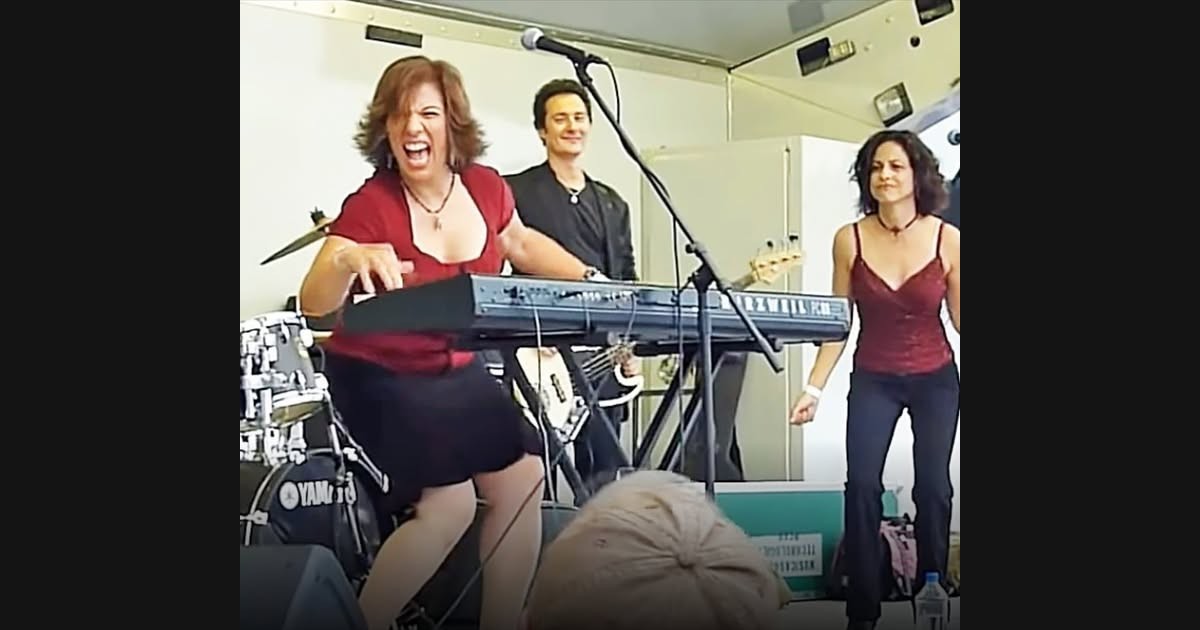
Boogie-woogie can sound continuously active while relying on a remarkably persistent foundation. A repeating lower pattern gives other figures something to move against. Doña Oxford’s keyboard performances offer a route into that relationship: the interest is not simply speed, but the coexistence of continuity and change.
The principal upload identifies Oxford at the Riverfront Blues Festival in 2013. Its companion from Oxford’s official channel identifies a separate performance at Witzend. The final upload returns to the Riverfront labeling. Keep those contexts distinct before treating the three videos as three separate festival appearances.
The two-hand idea is a starting point
The Smithsonian’s introduction to boogie piano describes driving left-hand rhythm alongside right-hand blues figures and syncopation. That is a useful general account of the style, rather than a compulsory rule for every second of every arrangement.
Watch on YouTube ↗
Think of the lower pattern as a moving floor. It can keep returning while upper figures take different shapes. Repetition gives a listener a reference, so a change in emphasis or a short pause can become noticeable without the whole musical framework needing to restart.
This is different from imagining that one hand is merely mechanical and the other is the entire creative performance. Maintaining a pattern with clear timing is an active musical responsibility. Its consistency allows the changing material to remain related to a common pulse.
Separate pulse, pattern, and phrase
- Pulse
- The underlying regular beat a listener can follow.
- Pattern
- A recurring group of notes or rhythmic events organized around that beat.
- Phrase
- A larger musical statement that can extend over several repetitions of the pattern.
These levels explain why repetition need not feel like standing still. A short bass pattern may return while a longer phrase develops above it. The ear can follow both the repeated unit and the changing statement at once.
The band adds another layer
When a keyboard appears within an ensemble, the rhythmic foundation is not the pianist’s responsibility alone. Other players can reinforce, answer, or contrast with it. Follow the relationship between the keyboard and its surrounding accompaniment rather than assuming that every low sound must come from the left hand.
A video angle may show the hands clearly without revealing every part of the sound. Instrument visibility and musical responsibility are related, but they are not identical. Listening across the ensemble keeps the performance from becoming only a display of finger movement.
Use the artist’s Witzend performance as a comparison
Oxford’s official Witzend clip supplies another setting for her boogie-woogie presentation. Compare the organizing principle rather than expecting the same sequence of figures: what repeats, what varies, and how a larger phrase reaches a point of rest.
Watch on YouTube ↗
There is no need to assign a precise note count or claim that every performance follows an identical form. The useful question is how a recurring foundation supports continuing invention. A different venue or recording balance may also make a different part of that relationship easier to hear.
Return to the festival with a clearer focus
The final Riverfront-labeled upload brings the comparison back to the festival context. Use it as another document of that presentation rather than adding an unsupported new event to Oxford’s history.
Watch on YouTube ↗
After following the repeating foundation, shift attention to the space between the more conspicuous figures. Continuity through those spaces is part of what makes the style move. The keyboard’s changing detail is effective because the surrounding musical structure remains clear enough to support it.


