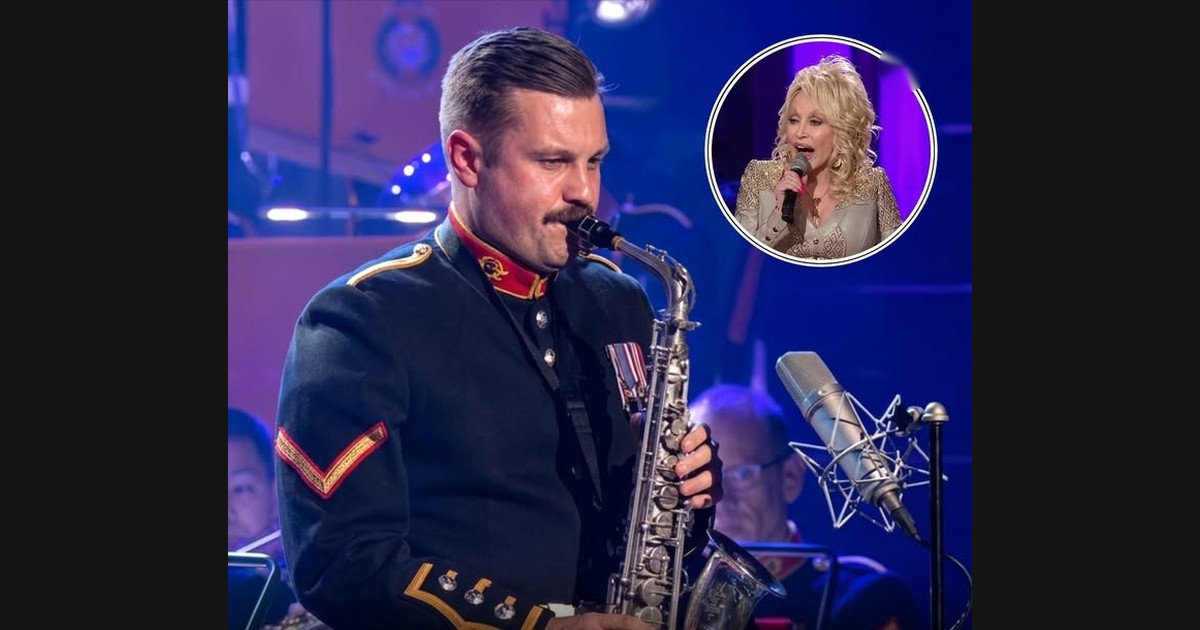
A saxophone can carry a song’s melody without reproducing the singer’s words. Cally Jones’s “I Will Always Love You” at the Royal Albert Hall gives that change a clear setting: a featured instrumental line within the Bands of HM Royal Marines’ concert presentation.
The institution’s own description identifies LCpl Cally Jones and the Mountbatten Festival of Music. Those credits give the performance a specific soloist and occasion. The composition remains Dolly Parton’s song even though the foreground is now an instrument rather than a vocal narrator.
Watch on YouTube ↗
The words leave a remembered shape
A listener familiar with a sung recording may bring its phrasing and dramatic situation into the instrumental version. Another listener can follow the melody without knowing every word. The arrangement needs to work through musical relationships under both conditions.
This makes melodic contour especially useful. A rising or falling idea, a sustained arrival and a recognizable return can preserve a composition’s identity even when the timbre changes. The instrument does not need to imitate a person’s voice exactly to communicate direction.
The soloist has a band around the line
A concert-band setting gives the melody a larger environment. Supporting parts can establish harmony, preserve movement or create contrast around the featured instrument. The soloist’s prominence depends partly on that surrounding organization.
For a focused listen, follow what continues when a melodic phrase rests. Then notice how the next entrance relates to that material. An accompaniment can prepare the return rather than simply occupy the space underneath it.
This is a way to examine the arrangement, not an instruction for breath or saxophone technique. A released video does not establish every physical or recording method involved. The musical responsibilities are enough to follow without guessing those details.
Another Royal Marines song treatment
The institution’s “Sweet Caroline” recording comes from the Mountbatten Festival of Music in 2021. Its description names Sam McIndoe, Kirsty Haines and Hannah Smither as the featured performers.
Watch on YouTube ↗
The different song gives the listener another example of familiar repertoire inside the same broad concert tradition. The shared institutional identity does not make it the same year’s event or the same solo arrangement as Jones’s performance.
Compare what establishes recognition in each selection. The title may prepare the listener, but a melodic landmark or the approach to a returning section makes the work identifiable as it unfolds.
A saxophone ensemble changes the scale
The Royal Sax Orchestra’s “I Will Always Love You” supplies another instrumental treatment. The same composition can be heard through a different performing group, keeping the tune as a stable reference.
Watch on YouTube ↗
A solo line in front of a band and an ensemble treatment organize attention differently. In one, the foreground is immediately assigned to a featured player; in another, responsibility can be shared across several instruments.
The comparison makes Jones’s contribution more specific. She is the credited soloist interpreting a known melody within a concert arrangement, not an anonymous instrument attached to a famous song. Hearing the role of the band and the identity of the composition together reveals how an instrumental version can remain recognizable while creating its own musical frame.


