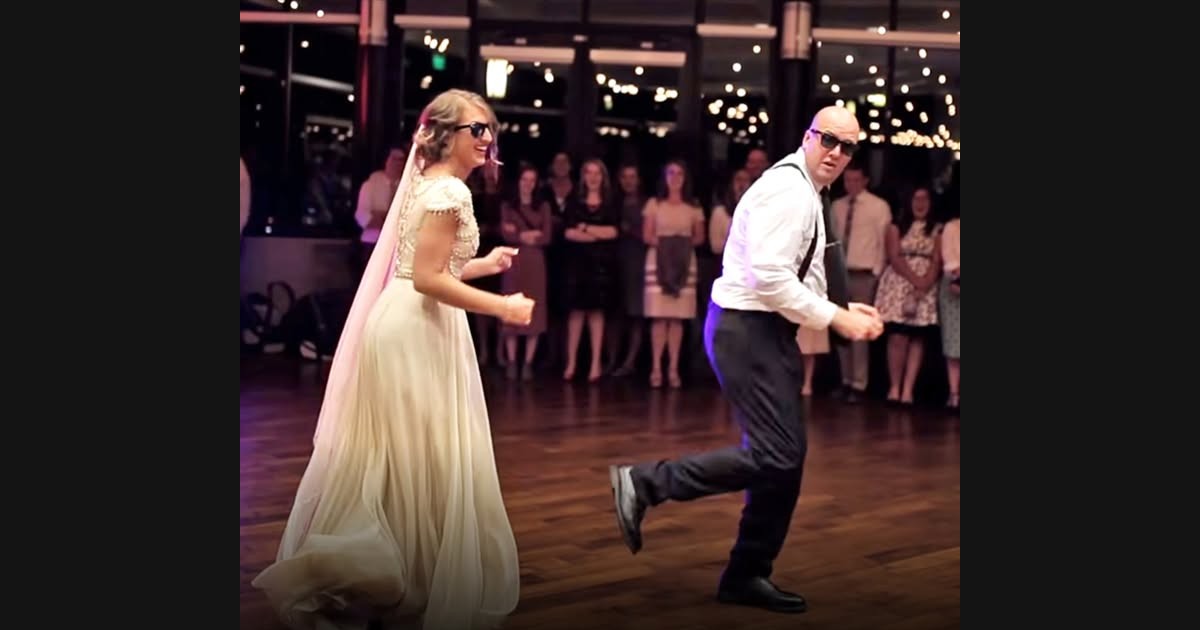
A surprise wedding dance is often surprising to the people watching, not to the pair performing it. BP Film & Photo explicitly describes Mikayla and her father’s reception mashup as choreographed. The clip’s appeal comes partly from preparation becoming visible through what looks like a playful change of plan.
The videographer identifies a traditional opening with “Butterfly Kisses,” followed by a sequence of pop and dance selections. The performers know the larger design; their audience first encounters it through the contrast between the opening expectation and what follows.
Watch on YouTube ↗
The guests learn the premise in stages
The first musical frame establishes a recognizable ceremonial dance. A change of soundtrack then gives viewers another interpretation of the occasion: the pair is presenting an act. That shift turns a familiar reception tradition into something more personal without abandoning the underlying family relationship.
A clear surprise needs that earlier reference. Beginning with every idea at maximum scale can leave the audience nothing to revise. An understandable opening gives the later change its meaning.
Preparation allows the partnership to stay readable
The source’s choreographed description identifies shared design rather than an accidental sequence. The performers need to know when the next musical idea arrives and how their actions relate. The routine can look relaxed while still depending on a common plan.
That does not reveal the number of rehearsals or prove that every gesture was fixed. Those details are not supplied. The documented point is that this was a prepared dance, with a DJ-made sequence described by the filmmakers.
Three decisions that make a short act understandable
- Establish the occasion: let the audience recognize the relationship and setting.
- Make the change clear: give the first shift enough definition to be noticed.
- Keep a continuing center: let the partnership connect the changing musical material.
These are ways to read the performance’s structure, rather than a requirement for other families to reproduce its exact routine. A small gesture can be enough if it communicates the idea clearly; complexity alone does not create a stronger surprise.
Another family uses the broad format
Kaila Cissell’s father-daughter mashup supplies a second wedding recording. It belongs to another occasion, even though the premise is related.
Watch on YouTube ↗
Compare how the audience is introduced to the change of format. A similar concept can be realized through different music, personalities and amounts of movement. The shared idea is a planned departure from a familiar expectation, not one mandatory sequence of steps.
A song video offers another visual reference
Justin Timberlake’s official “Can’t Stop the Feeling!” video gives the final selection a different form: a complete pop-song presentation associated with Trolls, rather than footage from either wedding.
Watch on YouTube ↗
Keeping that distinction clear allows the song to be explored as a related musical reference without assigning it to a reception soundtrack the source did not list.
Mikayla’s routine remains distinctive through its own documented design. A traditional opening, a prepared change and an ongoing partnership give the guests a story to discover. The surprise is an audience experience created by the performers’ shared plan, which is part of the pleasure rather than an explanation that diminishes it.


