“Iris” is a song title that does not function as a sung refrain. The name is absent from the lyric and from the film for which the song was written. John Rzeznik’s own account gives that familiar label a surprisingly specific source: seeing singer Iris DeMent’s name in a newspaper listing.
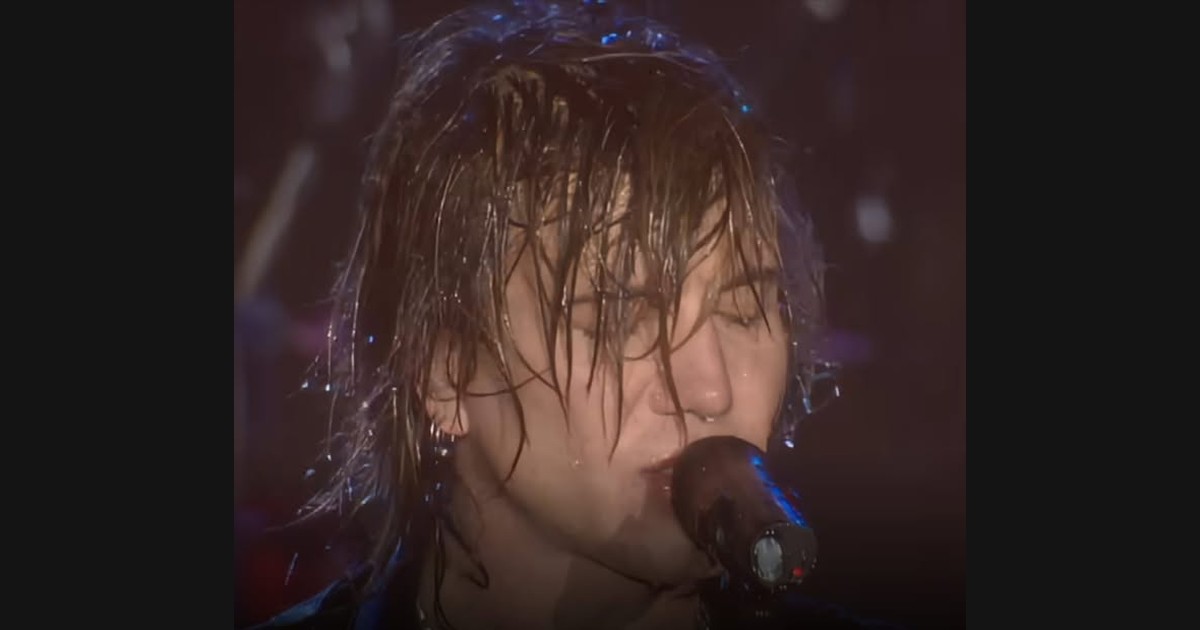
That naming story supplies another route into the Goo Goo Dolls’ famous Buffalo performance. The rain-soaked recording documents July 4, 2004, but the title belongs to an earlier creative decision around the song’s 1998 release.
Watch on YouTube ↗
A name can identify a song without summarizing it
In a firsthand Song Exploder interview, Rzeznik recalls noticing the listing while looking through LA Weekly. He liked the name and chose it when the track needed a title. He also describes an interest in song names that did not simply repeat their lyrics.
The account corrects an easy assumption: a proper name in a title does not necessarily identify the song’s narrator, addressee or a character in the associated film. A title can be an imaginative label chosen around a finished musical idea.
The lyric has its own dramatic address
The composition centers on wanting a particular person to understand the speaker while resisting the wider world’s scrutiny. That situation does not require the person addressed to be named Iris. The song communicates through its relationships and images rather than a character introduction.
This distinction matters when listening to a familiar recording. Recognition of the title can create expectations that the words do not actually require. Returning to the complete song lets the listener separate the catalog label from the dramatic position being sung.
The songwriter also describes a different film version
Rzeznik explains that the film’s director wanted a smaller version than the expanded recording. He consequently recorded a more stripped-down presentation for the scene. The familiar song therefore had different performing scales during its original release life, before later concert interpretations.
That context makes variation part of the work’s history. A large live arrangement and a smaller treatment can both communicate the same composition without needing identical instrumentation or density.
The official music video provides another frame
The band’s artist video offers the song outside the Buffalo concert. It gives the title a continuing release identity that can travel independently of one event’s weather or location.
Watch on YouTube ↗
For a focused comparison, follow the central musical statement in both presentations. Ask what remains recognizable when the surrounding image changes. A title helps locate the work, while melody and structure make it identifiable in performance.
A later presentation of Buffalo
The final upload returns to the same concert footage. Its newer resolution label does not make the naming story or the performance itself newly created.
Watch on YouTube ↗
The title, recording and public occasion each belong to a different part of the song’s life. Rzeznik’s account gives the first a concrete origin, while the Buffalo video preserves another later chapter. Together they make “Iris” more specific than a name listeners assume must belong to someone inside its story.


