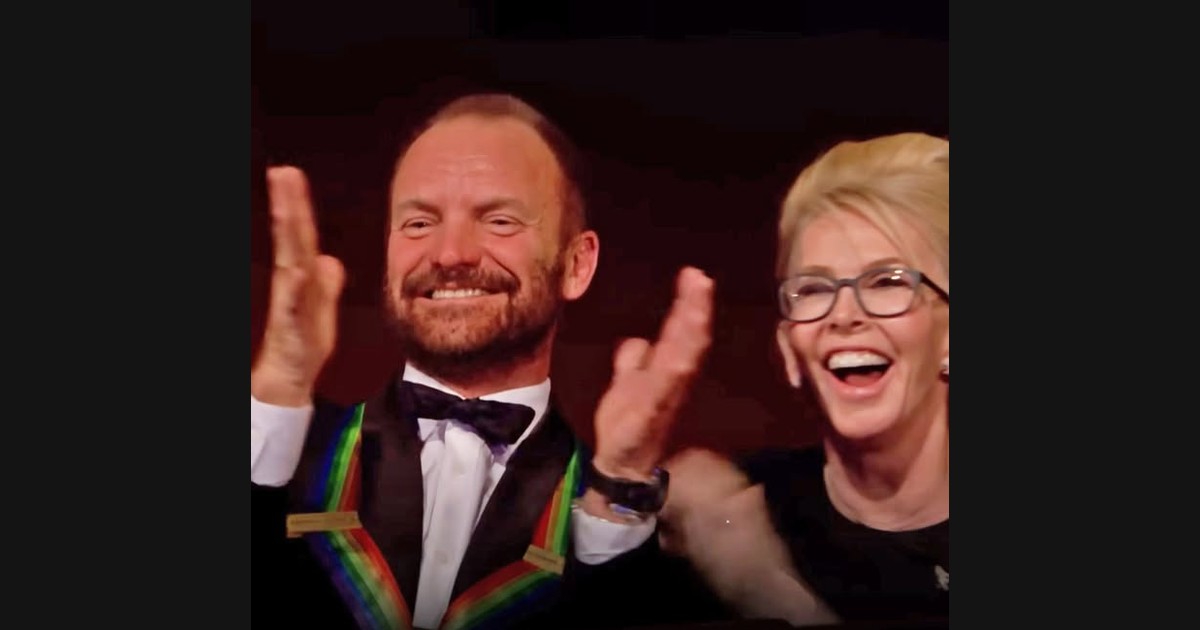
Bruno Mars’s “So Lonely” and “Message in a Bottle” tribute appears in more than one Kennedy Center publication. The original performance recording identifies the 2014 honor for Sting. The institution’s Honors Memories presentation places the material inside a later retrospective format.
That difference changes the viewing experience without changing the event. A performance can first be encountered as a complete musical item and later return as part of an institution’s account of what an honors occasion meant.
Watch on YouTube ↗
The medley carries the tribute through repertoire
The song choices connect Mars with Sting’s Police catalog. A two-song sequence needs both recognition and continuity: each work has its own identity, while the performers create a route from one into the other.
For a focused listen, follow the boundary between musical sections. Ask what makes the next arrival understandable. The composition provides familiar material; the medley’s arrangement creates a new relationship between the selected passages.
This is the musical tribute itself. It can be understood through what the artists perform, without needing to infer the honoree’s private response from a camera shot.
The institution adds a memory format
The official description of Honors Memories explains that the series catches up with honorees immediately after their event and combines those reflections with a memorable performance. That is another kind of documentation: a public occasion receives a later presentation built around recollection.
Watch on YouTube ↗
The format can give viewers context unavailable in a standalone song clip. A honoree’s recorded comments are different evidence from an observer guessing what a facial expression means. At the same time, the edited publication remains a selected presentation rather than every conversation surrounding the ceremony.
The general series description should not be turned into an invented quotation from Sting. The supported point is the format the Kennedy Center identifies and the performance it selects. Any specific personal statement needs to be heard and attributed accurately on its own terms.
A later description can discuss a different year
The Honors Memories upload also contains information about a later, reimagined honors format. That publication context should not be mistaken for the circumstances of the 2014 Sting tribute. A page can describe current institutional plans while showing archival material from an earlier event.
Keeping the dates distinct is useful whenever old performances return through anniversary or retrospective programming. The year of a clip’s publication is not automatically the year of the event inside it.
A fan upload adds circulation, not another occasion
The third video republishes the Mars medley through another channel. It is another route to the same tribute, rather than proof that the performers repeated it at a second Kennedy Center ceremony.
Watch on YouTube ↗
The three presentations consequently serve different purposes: a performance record, an institutional memory frame and later circulation through another publisher. The music remains the common reference. Understanding those roles lets viewers appreciate Mars’s interpretation while keeping the 2014 event and the later ways it has been remembered clearly identified.


