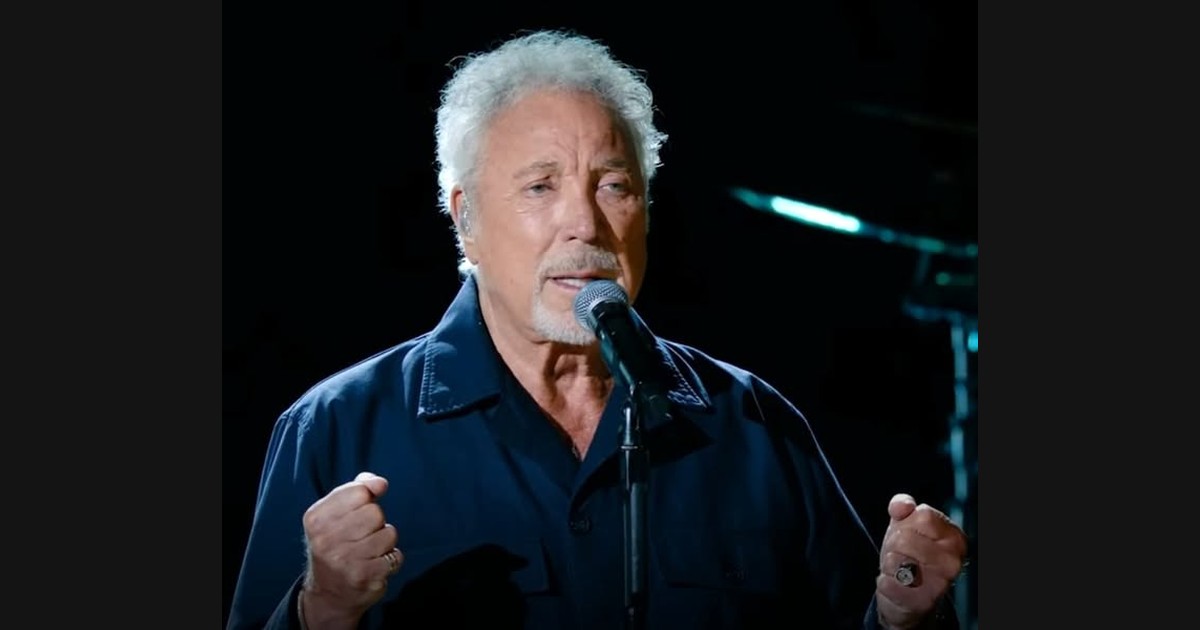
“I Won’t Crumble With You If You Fall” makes a distinction that can be missed when a performance is described only as sad. Its title offers steadiness in the presence of another person’s difficulty. Refusing to collapse alongside someone can be read as a commitment to remain useful, rather than as a refusal to care.
Tom Jones’s official London performance places that compact statement at the center of attention. The song also has a recording history beyond Jones: Smithsonian Folkways includes it on Bernice Johnson Reagon’s Give Your Hands to Struggle, originally issued in 1975 and reissued in 1997.
Watch on YouTube ↗
A small amount of language, a large distinction
Some songs accumulate detail through long narrative verses. Others ask a listener to consider a limited set of ideas from changing angles. This song’s title provides a productive point of entry because falling and crumbling describe related but different actions. One person’s difficulty does not have to determine the other’s response.
That is a reading of the writing, not a statement about Jones’s private thoughts. A listener may connect the song with personal loss, loyalty, or endurance, but those associations should remain distinguishable from a documented explanation of a particular performance.
Listen for what happens when a phrase returns. Does the repetition feel like clarification, insistence, reassurance, or a decision being renewed? More than one reading may be possible. The useful evidence is how the phrase is placed and delivered, rather than a claim that the singer must be remembering a specific event.
Musical space can carry part of the argument
Watch on YouTube ↗
The Real World Studios performance gives the same material another official setting. Compare the spaces around the vocal phrases, including the time available for an idea to register. A gap is not necessarily an absence of expression; it can make the next statement more noticeable.
Separate pace from emotional intensity. A slow passage need not be weak, and a forceful delivery need not depend on constant volume. Duration, articulation, and the relationship with the accompaniment all affect the weight a listener gives a sentence.
Try a short description using verbs rather than superlatives: the phrase waits, returns, settles, or presses forward. Then check whether the recording supports the description. This produces a clearer account than saying the performance is beyond comparison, especially when three versions are available to compare.
From concert and studio to television
Watch on YouTube ↗
The Voice UK appearance adds a television-program context. A musical statement can occupy a different place in a broadcast than in a concert or a studio session. The program supplies its own surrounding conversation and expectations, while the song remains an independent work.
Keep the dates attached to the right things: the main upload identifies a London performance in 2021, and the program upload identifies 2022. Neither date replaces the earlier history of Reagon’s recording. Nor should a later upload be treated automatically as the date when the song was written.
Across the three selections, follow one complete phrase and the space after it. The comparison reveals how an economical piece can invite different shades of attention while preserving the central distinction between sharing another person’s difficulty and surrendering one’s own capacity to stand beside them.


