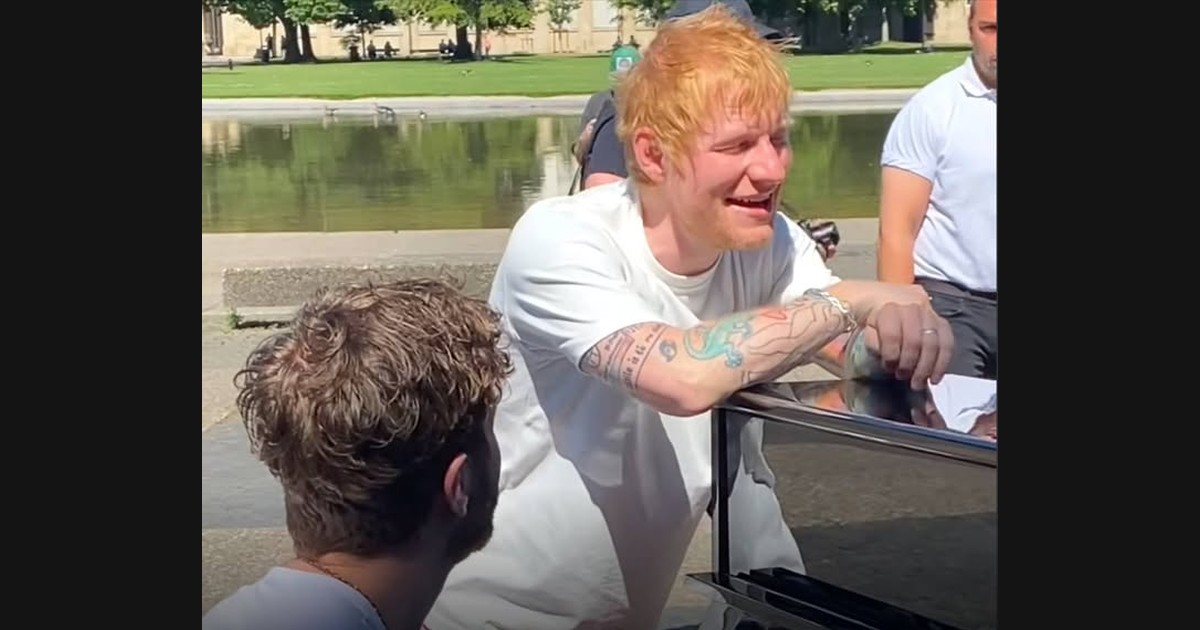
A piano-and-voice presentation of “Perfect” changes what the accompaniment has to carry. The melody can remain recognizable while a single keyboard supplies the harmonic movement, lower notes, and the connections between vocal phrases. That musical relationship is more useful to follow than a headline claiming that every nearby listener had the same emotional response.
The principal upload presents an outdoor Sheeran clip, but does not supply a dependable full event history. Treat the location as part of its visible setting rather than evidence that the performance was unplanned. A public space can host a spontaneous encounter, a prepared performance, or an organized filming session.
The song remains a useful reference
“Perfect” comes from Sheeran’s 2017 album ÷. Its catalog also includes duet treatments with Beyoncé and Andrea Bocelli, documented by Official Charts. The song therefore has a history of changing its performing relationships while retaining its identity. A keyboard-supported presentation belongs to that broader question of what can change around an established melody.
Watch on YouTube ↗
A keyboard can perform several functions simultaneously. Lower notes can outline the harmonic foundation, chords can establish the surrounding harmony, and shorter figures can fill spaces between sung lines. These are roles to distinguish in listening, not a claim that every pianist uses the same pattern throughout a song.
Try following one complete vocal phrase without watching the singer. Notice what tells you that the phrase is approaching a point of rest: the voice’s melodic direction, the accompanying chord, or both. Then attend to the space after the phrase. The accompaniment can keep the music connected while the vocalist is silent.
Outdoor does not mean unproduced
The related canal-boat clip illustrates why setting and production should stay separate. Its publisher identifies Sheeran as filming a music video while passing a jogger. The everyday surroundings are real context, but the stated filming activity is also part of the occasion. A camera recording a public place does not automatically document an accidental performance.
Watch on YouTube ↗
| What a clip can show | What needs separate evidence |
|---|---|
| Performers and their surroundings. | Whether the encounter was arranged beforehand. |
| A visible instrument and musical interaction. | The complete recording and production process. |
| Some nearby responses. | A claim about how everyone present felt. |
The subway appearance supplies a clearer program frame
The final video is the official Tonight Show “Subway Busking with Ed Sheeran” segment. Its program identity gives the public performance a specific entertainment frame. It is a different appearance, not another angle of the outdoor piano clip or another recording of “Perfect.”
Watch on YouTube ↗
That distinction improves the comparison. The three videos can be grouped by their use of public surroundings without being merged into one event. A piano partnership, a music-video filming situation, and a television busking segment each create a different relationship between performer, camera, and people nearby.
Keep the musical and documentary questions together
For the principal clip, the concrete musical interest is how a keyboard supports a familiar vocal melody. For the companion clips, the interest expands to how public performance is presented. Neither question requires a story about a chance encounter or a universal reaction.
Separating those layers allows an everyday setting to remain appealing while the actual music receives closer attention. The song, the accompaniment, and the occasion each contribute something; none has to stand in for evidence about the others.


