A familiar singer can become so closely associated with a song that authorship starts to disappear from view. Johnny Cash provides a particularly useful comparison. He wrote “Folsom Prison Blues,” while “Hurt,” one of his later recordings, was written by Trent Reznor. Both can be considered Cash performances without becoming Cash compositions.
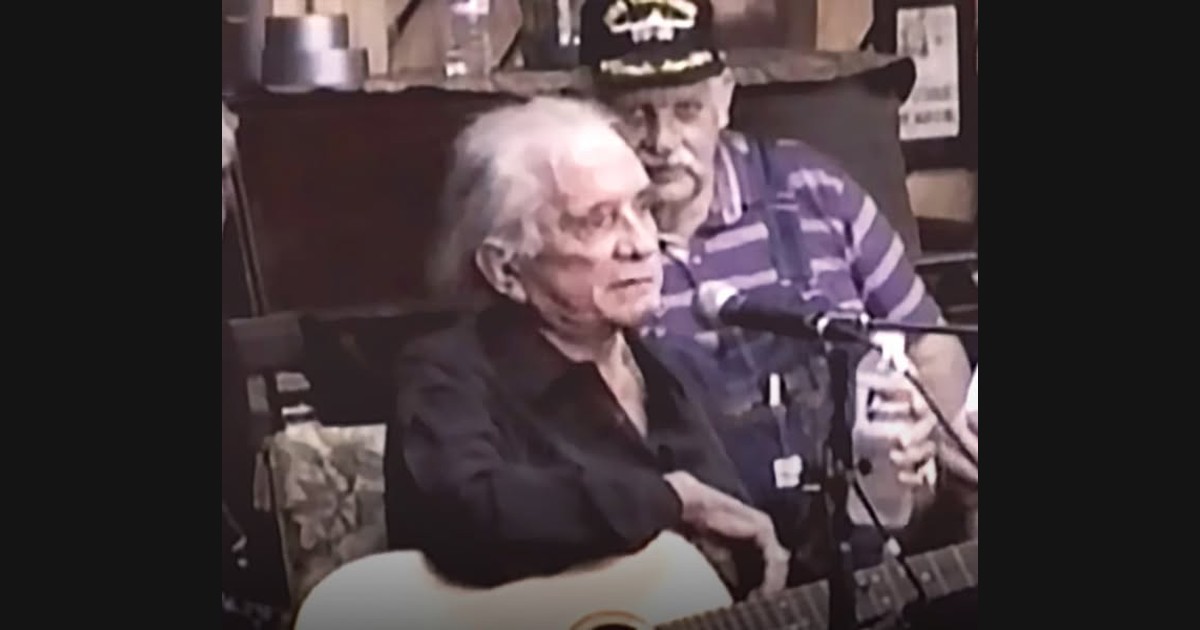
The stage clip at the center of this selection is best approached as a performance rather than as a claim about finality. Its companion recordings make a more durable question possible: what changes when an artist moves between presenting his own writing and interpreting somebody else’s?
Watch on YouTube ↗
Three roles that should remain separate
The songwriter creates the composition; the performer presents it; the narrator is the speaking position inside the song. One person can occupy the first two roles while still portraying a narrator whose experiences are fictional. Keeping those categories separate prevents a dramatic first-person song from being treated as a sworn autobiographical statement.
Cash’s official catalog credits “Folsom Prison Blues” to John R. Cash and dates its original release to 1955. That establishes authorship and release history. It does not require a listener to identify the song’s narrator with every fact of its writer’s life.
In the stage recording, focus on the relationship between the sung narrative and the accompaniment. Notice how repeated musical material supports the progress of a story. A simple accompaniment is not evidence that a performance lacks decisions: spacing, emphasis, and the shaping of a line still affect how a narrator comes across.
The same artist with his own composition
Watch on YouTube ↗
The Denmark performance of “Folsom Prison Blues” gives the comparison a clearly identified song reference. Listen to how narrative information is delivered within a recurring framework. Does the return of a familiar figure make each new passage feel continuous, or does a change of emphasis draw attention to a particular thought?
A useful observation connects delivery with a musical feature. “The recurring accompaniment keeps the narrative moving” explains a relationship. A claim that the singer is confessing an actual experience would require quite different evidence and should not be inferred from an expressive voice.
An interpretation that does not erase its writer
Watch on YouTube ↗
“Hurt” changes the authorship relationship. Cash’s official catalog names Reznor as songwriter and places the recording on American IV: The Man Comes Around, released in 2002. The official music-video entry separately identifies director Mark Romanek. Composition, recording, and screen presentation each contribute, but they are different creative layers.
Compare how a listener encounters the words in a stage performance and in a constructed music video. Editing and imagery can invite associations beyond the vocal track. Those associations may be powerful, yet they do not turn every line into a literal statement about the performer’s health or private thoughts.
Try describing “Hurt” first as a song without the video, then as an audiovisual work. What did the images add to your interpretation? That distinction recognizes the director’s contribution without reducing Cash’s interpretation to a biographical illustration.
The productive contrast is therefore not “authentic original versus borrowed song.” It is an artist exercising different kinds of authorship and interpretation. Keeping the writer, narrator, performer, and video maker visible gives both recordings more room to be understood on their own terms.


