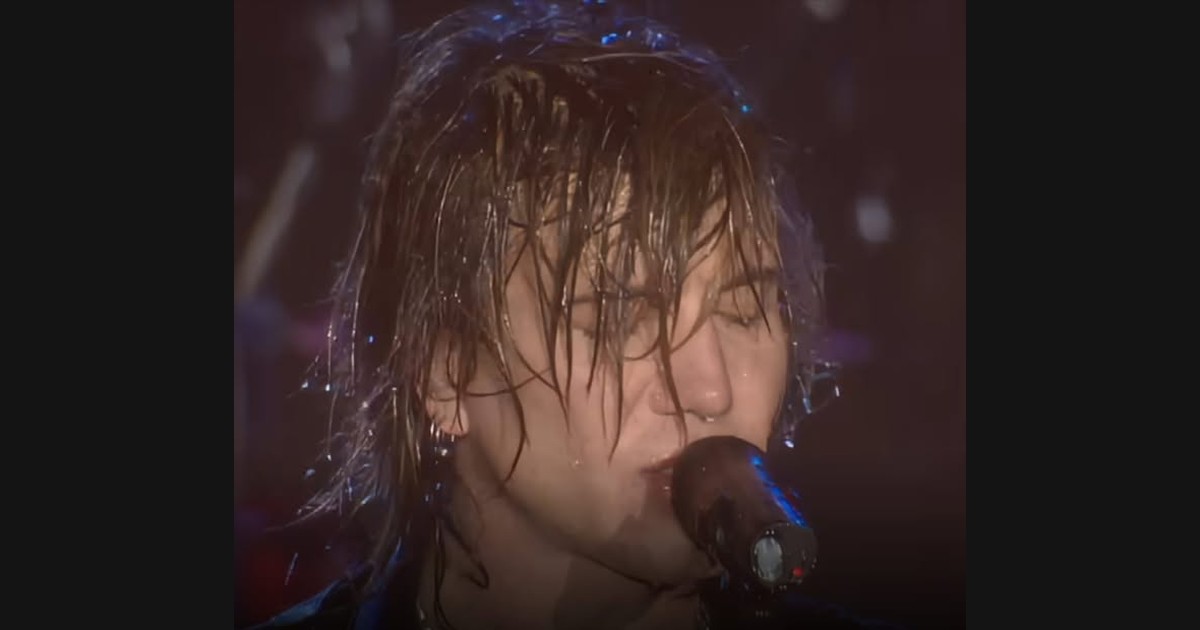
Rain is the most immediately recognizable detail in the Goo Goo Dolls’ Buffalo “Iris” video. The hometown setting supplies another layer. The band’s own publication places the July 4, 2004, performance in Niagara Square, making it a return to a particular city rather than simply an outdoor show with dramatic weather.
That local connection continues beyond the concert. The Buffalo History Museum’s Long Way Home: 40 Years of the Goo Goo Dolls exhibition places the band’s music inside the region’s cultural history. A concert recording and a museum presentation document different parts of the same continuing relationship.
Watch on YouTube ↗
A hometown concert has a local reference
A song known internationally can acquire another meaning when performed in the place associated with the band’s beginnings. The musical work remains recognizable, but the occasion adds a relationship between artist and location.
This does not require assuming that every person attending shared the same memories. “Hometown” is a documented connection, not a description of everyone’s private response. The recording can preserve a public return while listeners encounter it from many different positions.
The museum expands the frame
The museum describes the band’s route from local venues to international recognition. Its exhibition uses photographs, memorabilia, fashion, media and fan experiences to place that development within Buffalo’s broader cultural landscape.
Those materials answer questions that a song clip cannot answer alone. A concert film captures an occasion; a collection can connect occasions across years. The music becomes part of a city history that includes local spaces, people and objects as well as widely circulated recordings.
The exhibit’s title, Long Way Home, makes the return itself part of the presentation. It is another way of understanding a public artist’s relationship with a place without reducing that relationship to one memorable night.
The official music video travels differently
The band’s “Iris” music video supplies another frame for the song. It can circulate independently of the Buffalo event and introduce listeners who have no prior connection with the city.
Watch on YouTube ↗
The two presentations demonstrate how repertoire can operate at several scales. A song can belong to an international artist catalog and still carry a specific local association through a homecoming performance. The wider reach does not remove the earlier place-based relationship.
A later upload is another route back to the event
The final video republishes the Buffalo footage with a high-resolution label. It should not be confused with another hometown concert on another date.
Watch on YouTube ↗
A later publication can bring an old event to new viewers, just as an exhibition can give historical material another public setting. In each case, keeping the original date and source clear allows the new encounter to remain connected with what actually happened.
The Buffalo “Iris” is therefore more than a record of rain. It is one point in a continuing local story: a band returns to its city, a performance becomes a lasting recording, and a regional museum later places that career within a broader cultural history. Hearing the song inside that frame gives its setting a specificity that weather alone cannot provide.


