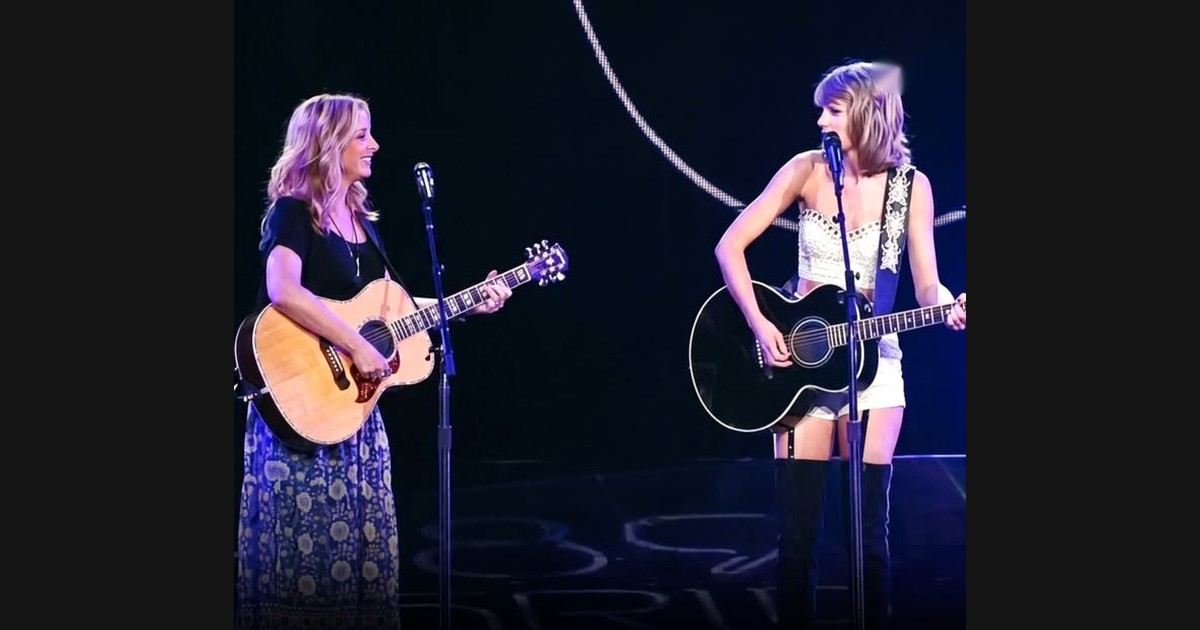
“Smelly Cat” arrives at a Taylor Swift concert carrying another world with it. Lisa Kudrow is a real performer, Phoebe Buffay is her fictional character in Friends, and the song belongs to that character’s television story. Keeping those identities separate makes this 1989 Tour crossover more interesting than simply calling it an unexpected duet.
Contemporary footage distributor Storyful identifies the occasion as Swift’s August 2015 Staples Center concert in Los Angeles. Its account confirms Kudrow’s appearance and the connection to Phoebe. The concert clips and the accompanying official Friends video therefore offer two different settings for the same piece of comic repertoire.
The actor brings a character’s musical history
An actor can perform a character’s signature song without turning a real concert into another episode of the series. The audience can recognize the association while understanding that Swift is hosting Kudrow. That double awareness is central to a crossover: the familiar fictional identity supplies context, while the real encounter supplies the occasion.
It also changes how credits should be read. Calling the song Phoebe’s composition describes the television fiction. It does not provide a complete real-world songwriting credit. Similarly, Swift’s participation makes her an interpreter in this performance; it does not turn the song into a composition from her own album catalog.
Watch on YouTube ↗
Three frames for one song
| Frame | What it contributes |
|---|---|
| Phoebe within Friends | A fictional musical identity and the song’s comic associations. |
| Kudrow on a concert stage | The performer who can carry those associations into another setting. |
| Swift as concert host | A real musical partnership within her touring program. |
These layers can overlap without becoming interchangeable. A joke about Phoebe’s career is part of a performance, rather than a dependable biography of Kudrow. A concert appearance is also not evidence that the television character has literally joined Swift’s band. Reading the frame correctly preserves the joke instead of converting it into a misleading factual claim.
Why the television clip is useful
The second video, published by the official Friends channel, returns the song to its television context. It provides a useful reference for someone who knows Swift’s music but has never followed the sitcom. The point is not to memorize an episode history. It is to establish why this particular song can identify a character so quickly.
Watch on YouTube ↗
Compare the functions of the two settings. In a television scene, music can advance a joke or reveal a character. In a concert, that existing association can become the reason for a guest appearance. The same tune is doing a different piece of storytelling work because the surrounding program has changed.
Use the second concert view as a view, not a new event
The final upload is another concert perspective on the Swift–Kudrow pairing. Different framing may show a gesture or exchange more clearly, but another upload does not automatically mean another performance. Treat it as an opportunity to understand the encounter rather than as evidence of a separate collaboration.
Watch on YouTube ↗
A helpful description of the crossover can therefore stay precise: Kudrow and Swift perform a song associated with Phoebe at a real concert. That single distinction lets the television reference remain playful while giving proper attention to the people actually on the stage.


