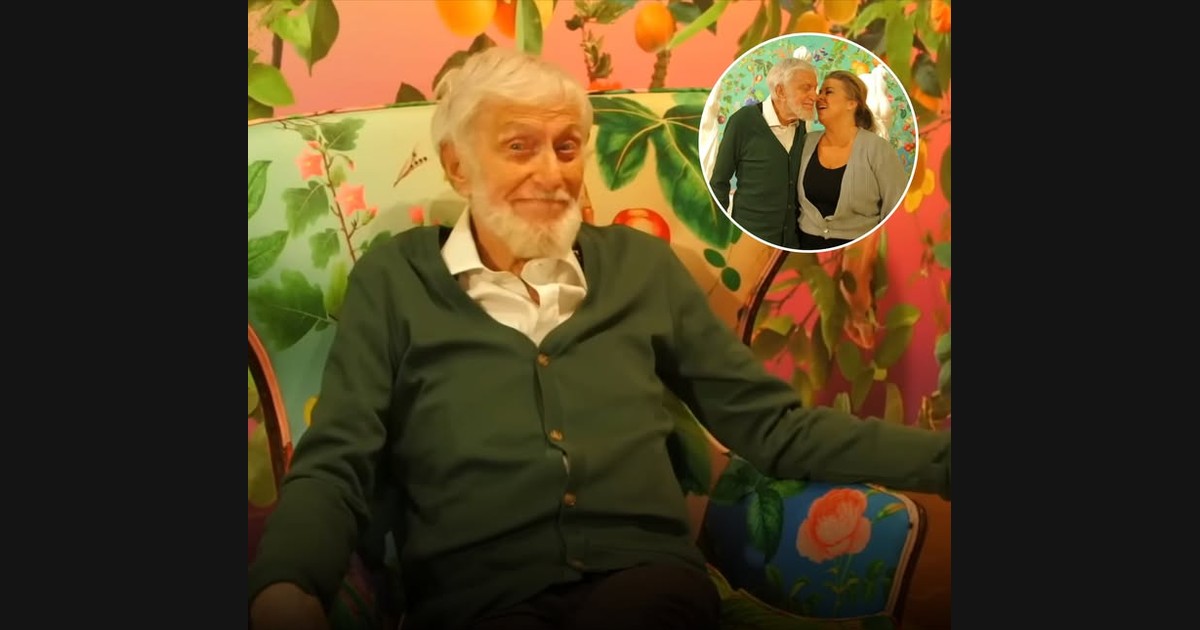
“Everybody Loves a Lover” places its performers inside a room with a visual identity of its own. Arlene Silver’s official upload credits Arlene and the Vantastix, featuring Dick Van Dyke and Tony Guerrero, and identifies the location as SUPERSHOW, a Los Angeles art installation.
The same description names the artists behind the setting: David Allen Burns and Austin Young, working as Fallen Fruit. Silver is credited as director. The result is a collaboration between a musical ensemble, a filmed presentation and an existing visual environment.
Watch on YouTube ↗
The room is more than an anonymous backdrop
A distinctive setting can give a performance continuity. The audience recognizes a shared space around changing musical contributions, so the room becomes a visual reference as well as a place where people stand.
That does not make the art installation the author of the song. Location, direction, interpretation and composition remain separate contributions. The credits let each be acknowledged without reducing the release to one familiar face performing in a colorful room.
A song title supplies a social premise
“Everybody Loves a Lover” announces a broad claim about affection and how it is received. Its playful scale gives an ensemble material that can be shared through alternating attention and combined singing. The performers can communicate a common attitude while retaining recognizable individual identities.
For a focused viewing, follow how attention moves between the people involved. Ask whether a contribution continues the same thought, gives it another color or creates a response. This is a way to understand ensemble organization without inventing a private account of the relationships among the performers.
The audio identifies the composition separately
The official artist audio credits Richard Adler and Robert Allen as composer and lyricist. That separates the writers from the people creating this particular release, and gives the song a history beyond the filmed occasion.
Watch on YouTube ↗
Listening without concentrating on the room can make another relationship clearer: the balance between a featured voice and the shared ensemble sound. The composition continues to organize the performance even when its visual frame is removed.
A music video therefore adds one kind of information without replacing the musical arrangement. The image can establish character and interaction, while melody, timing and supporting parts give those interactions a continuing structure.
A rehearsal record belongs to another occasion
The final clip comes from Stu’s Show. Its original description identifies rehearsal before a May 8, 2013, broadcast appearance by Dick and Arlene Van Dyke and the Vantastix.
Watch on YouTube ↗
It is useful context for the continuing performers, not behind-the-scenes footage from the later “Everybody Loves a Lover” production. Keeping that distinction clear prevents a related rehearsal from being assigned to the wrong release.
The opening video’s appeal becomes more specific through its own credits. Silver directs a named musical gathering inside a named artwork, while the audio retains the songwriters’ contribution. The ensemble, film and setting each do a different job, and their meeting gives this version its particular public identity.


