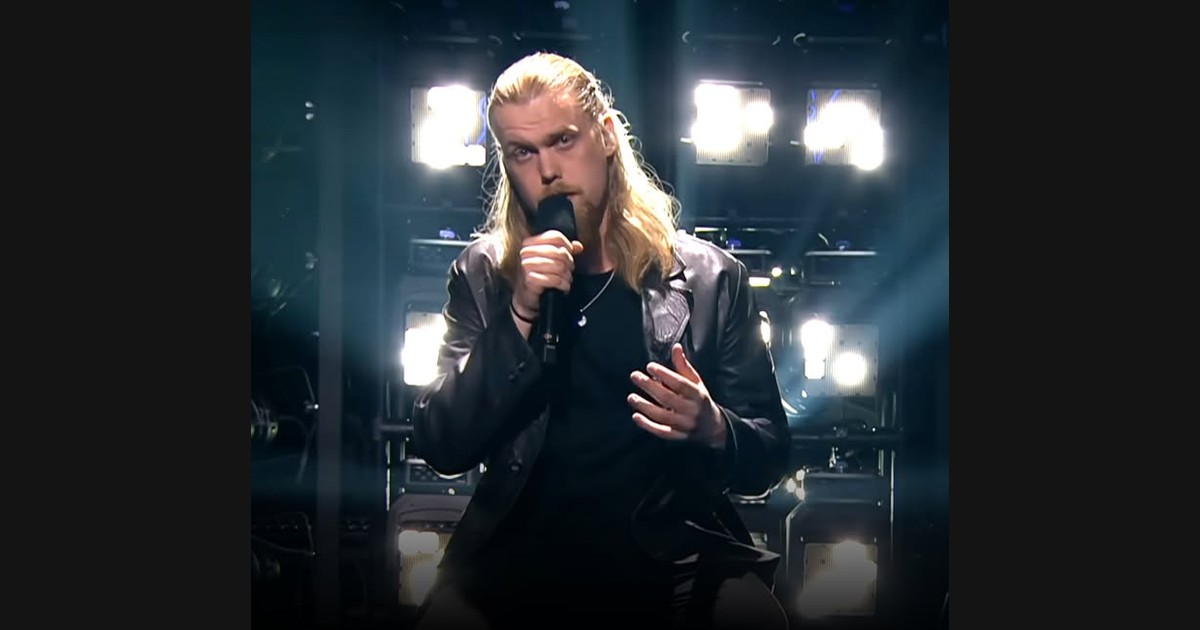
The Voice Norway’s official uploads identify Kristoffer Sørensen in three different selections: “The Sound of Silence” live, “Jar of Hearts” live, and a “Leave a Light On” battle with Tage Hamre Skar. The titles supply a useful map before any vocal comparison begins.
They should not be treated as three sections of one performance. The songs change, and the battle release explicitly names another participant. A continuing singer connects the sequence while each selection establishes its own musical task.
Watch on YouTube ↗
The song has a life before this stage
Simon & Garfunkel’s official account identifies “The Sound of Silence” as a Paul Simon composition first recorded by the duo in March 1964. Sørensen’s 2023 program selection therefore adds another interpretation to established repertoire.
That background is useful because a distinctive new delivery can draw attention away from the writing. The composition supplies recognizable material; the current singer and arrangement determine how it is presented on this occasion.
Follow a complete phrase and the support around it. Identify what makes the line clear, what carries continuity when the voice pauses, and how the next entrance is prepared. Those relationships provide a musical description without requiring a diagnosis of vocal technique.
A featured voice is one part of a performance
Television naturally directs attention toward a contestant, but the musical result can involve supporting performers and a prepared arrangement. A close camera view does not make the voice the only source of musical information.
For example, an accompanying pattern can keep the passage oriented while the singer changes emphasis. A transition can be prepared by another part before the next vocal statement begins. Describe the role you can hear instead of treating every change as the singer’s action alone.
“Jar of Hearts” changes the repertoire
Watch on YouTube ↗
The second official upload identifies a live selection from Christina Perri’s repertoire. It keeps Sørensen as the featured artist while changing the composition. That is a different comparison from hearing two versions of “The Sound of Silence.”
Choose a similar musical task rather than assuming the songs contain matching sections. An opening statement or a returning idea can be compared for function even when its melody and structure differ.
The point is not to force the singer into one fixed emotional identity. Different material can ask for different distributions of emphasis, while the performer’s recognizable presence continues.
The battle adds another named participant
Watch on YouTube ↗
“Leave a Light On,” identified through Tom Walker’s repertoire, is labeled as a battle with Tage Hamre Skar. The two names in that title supply a clear change of format: the performance now explicitly presents a pairing.
Follow how attention moves between the participants rather than assuming that every moment must be a simultaneous vocal contest. Alternation, joined passages, and supporting contributions are musical relationships to identify from the recording.
Keep competition outcomes separate from performance labels. A title saying “live” or “battle” does not, by itself, establish who ultimately won a season or advanced at another stage.
The three-item map then remains precise: a familiar Simon composition, another solo-feature selection, and a named battle pairing. That clarity lets the reader compare actual performance tasks rather than turning different songs and rounds into one generalized vocal highlight.


