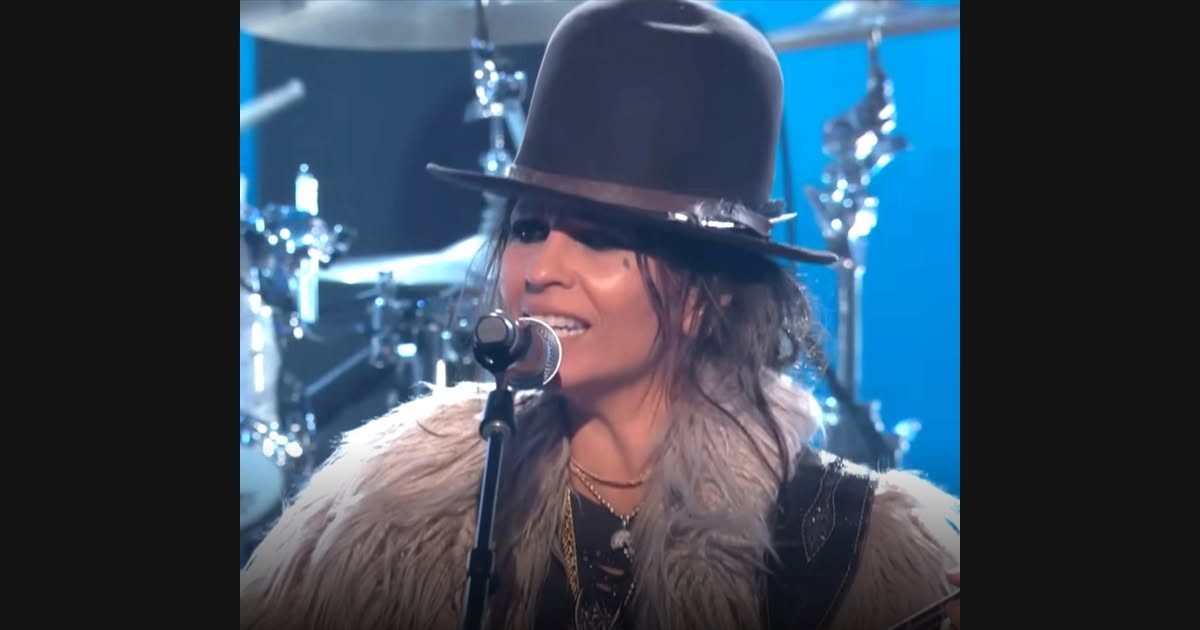
The official “What’s Up” upload is labeled with Dick Clark’s New Year’s Rockin’ Eve 2026. That is the program’s New Year identity, not a reason to move every related 4 Non Blondes appearance into the same calendar date.
ABC’s contemporary account describes the band closing its 2025 run with the program airing on December 31. The distinction is straightforward but useful: a New Year broadcast can welcome 2026 while its schedule begins in 2025.
Watch on YouTube ↗
The broadcast has a specific public frame
A holiday music program assembles selections into a larger event. A band appearance belongs to that event’s sequence, which is different from a complete standalone concert or a music video produced for one song.
The program title identifies the public occasion. It does not, by itself, establish whether every musical segment was recorded at the same moment or in one place. Avoid adding an exact filming history that the release does not supply.
For a practical note, keep three dates separate where known: the song’s recorded history, the program’s scheduled broadcast, and any later upload. A familiar video can carry more than one legitimate year for different reasons.
The composition has an earlier recording identity
Watch on YouTube ↗
The official “What’s Up” music video supplies the familiar band presentation. The label-delivered recording places the song on Bigger, Better, Faster, More!, with a 1992 phonogram credit and Linda Perry identified as composer-lyricist.
That credit gives the newer appearance a documented repertoire connection without making the song a newly written 2026 release. Perry’s writing and the band’s later public performance belong to different stages of the material’s life.
Compare a complete returning passage rather than only the portion most frequently excerpted. What remains recognizable, and what belongs to the current delivery? A longstanding song can keep its identity while the performance’s immediate context changes.
The Roxy upload is another occasion
Watch on YouTube ↗
The fan recording labels the Roxy appearance December 16, 2025. Keep that date as the uploader’s identification rather than using it to prove the filming date of the television selection.
The venue clip and broadcast can be compared through performance format. One presents a band selection within a concert setting; the other places it inside a multi-artist holiday program. Similar repertoire does not make those frames interchangeable.
A reunion narrative needs clear limits
ABC’s report places the New Year appearance within a renewed run of shows in 2025. That provides contemporary context without requiring a claim that this was the first time the musicians had shared a stage since the 1990s.
Likewise, a public return does not prove that every current arrangement or participant is identical to an earlier recording lineup. Use the supplied artist credit and describe a particular performance rather than filling in personnel from memory.
The sequence is most useful as a clear time map: an established song, a separately labeled December concert, and a New Year program naming the year being welcomed. Those distinctions let the performance keep its present context while the older writing and recording credits remain visible.


