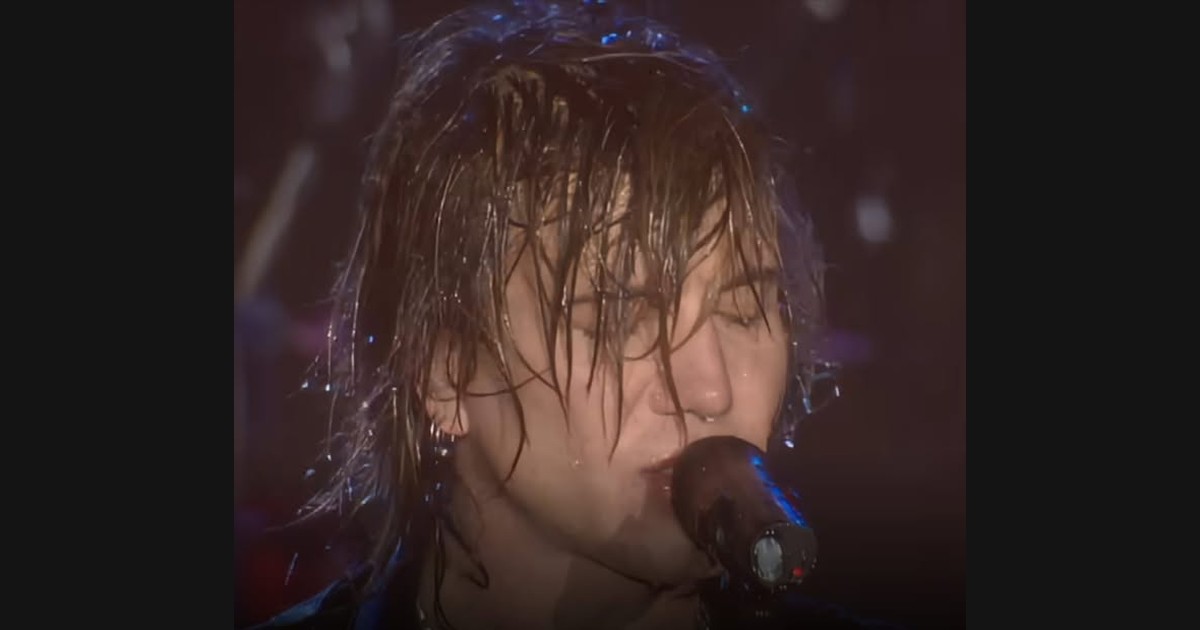
The Goo Goo Dolls’ Buffalo “Iris” is both a performance of a familiar song and a record of a particular public event. The official upload identifies July 4, 2004, in the band’s hometown. A separate official music video and a later third-party presentation give viewers three different release frames to distinguish.
The distinction matters because online titles can make old material appear new. A recording date, an upload date and a label such as “4 K” answer different questions. Keeping them separate preserves the identity of the concert rather than repeatedly reinventing its circumstances.
Watch on YouTube ↗
The event has a date and place
The band’s own description identifies Niagara Square in Buffalo. Its label’s catalog also documents the concert release and the heavy rain associated with it. Those facts locate the footage without requiring a precise audience estimate or an invented account of every disruption.
The weather belongs to the recorded occasion, but it does not by itself establish what every person felt. A wet stage can become a distinctive visual reference while the performance remains something that needs to be understood through its music and ensemble.
A concert film preserves an occasion
A live-event recording includes more than the composition. The stage, performers and public setting give the song a particular context. The finished film also selects how viewers encounter that context through camera framing and editing.
This does not mean the film is an unmediated view from every seat. It is a released presentation of an event. A recording can document a real concert while still being shaped for viewing and listening.
The official music video has another purpose
The band’s official “Iris” music video presents the song outside the Buffalo event. It belongs to the track’s artist-video identity rather than the later homecoming concert.
Watch on YouTube ↗
Compare what each form asks viewers to follow. The concert frame connects a song with a shared occasion; the artist video can build a visual world around the recording. The same composition makes both recognizable, but their images do not describe the same event.
The band’s official account connects “Iris” with the 1998 City of Angels soundtrack and Dizzy Up the Girl. That release history precedes the 2004 concert. A song can move from soundtrack and album into live repertoire without becoming a new composition each time.
A later resolution label is not another performance
The final upload presents the Buffalo footage with a “4 K 60 fps” label. It is a third-party release of the concert material, not evidence of another date on which the band repeated the event.
Watch on YouTube ↗
Such a label does not independently establish the original camera specification or the exact processing applied later. Those details require production documentation. The useful supported fact is the material’s connection with the already identified Buffalo performance.
The three presentations are most rewarding when their roles remain clear. One documents a concert, another supplies the official music-video reference, and the last circulates that concert footage again. The song connects them, while their separate identities explain what each recording can actually show.


