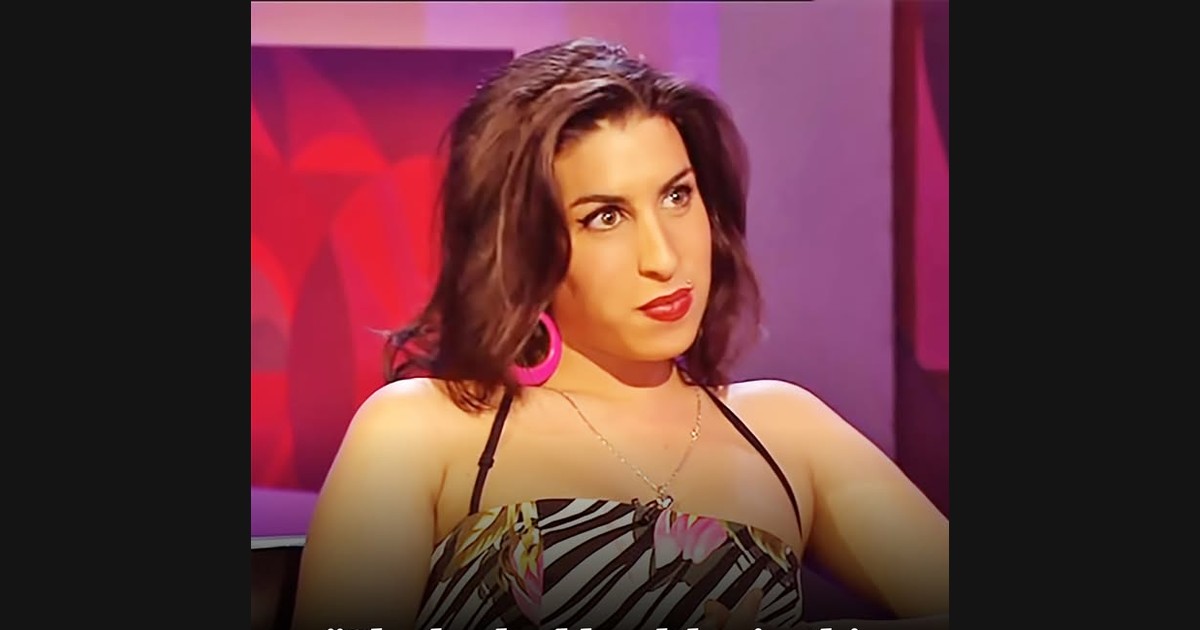
An interview asks a performer to speak as a public guest; a song asks the same performer to communicate a constructed musical statement. The Jonathan Ross upload combining conversation with Amy Winehouse’s “I Heard Love Is Blind” makes that difference useful. The interview and singing are connected parts of a television appearance, but they are not interchangeable kinds of information.
The related official audio and North Sea Jazz archive keep the song in place while changing the frame. Winehouse’s catalog includes it on Frank, giving the performance a reference beyond the surrounding talk-show conversation.
Watch on YouTube ↗
A spoken answer and a sung narrator differ
In conversation, a guest responds to a host’s prompt within a public exchange. In a song, the vocal line follows a composition whose words and musical proportions were not created as an answer to that particular interview question.
Keeping those roles distinct prevents the song from being treated as an unrestricted confession. A singer can communicate humor, evasion, directness, or uncertainty through a narrator without requiring every detail to describe an independently verified event.
Watch where your attention changes from the interview’s exchange to the song’s musical course. The shift gives the audience another kind of listening task: instead of waiting for a reply, follow how a phrase develops toward a recurring idea or an ending.
Delivery can sound conversational while remaining musical
A sung statement may retain some of the pace or emphasis associated with speech. That does not mean it is unstructured. Its syllables still occupy a relationship with accompaniment, recurring time, and the direction of the melodic line.
Choose a complete thought and follow its beginning, emphasis, and completion. Then hear the same passage again with attention to the supporting music. The relationship can explain a conversational impression more precisely than a broad claim that the singer is simply speaking naturally.
The album reference removes the interview
The official audio of “I Heard Love Is Blind” supplies the second selection. It centers the recorded song without the same public conversation around it.
Watch on YouTube ↗
Compare how the work establishes its principal idea when the interview no longer supplies the immediate introduction. A listener’s impression may change because of that surrounding frame even before a particular musical difference is identified.
The album association also matters. Frank presents the song among other repertoire, while a standalone upload can make it appear as a complete introduction to the artist. Neither route is a full account of the catalog.
A festival is another public situation
North Sea Jazz’s own archive identifies the final selection as a 2004 performance. It changes the occasion while retaining the composition.
Watch on YouTube ↗
Follow one recurring passage across the album and festival references. Consider how its preparation and completion affect its sense of address, allowing each performance to establish a coherent course.
The three frames then remain clear: a television guest moving between conversation and singing, a released album recording, and a festival performance. That structure gives “I Heard Love Is Blind” a specific listening history without turning every delivery choice into a retrospective claim about Winehouse’s private life.


