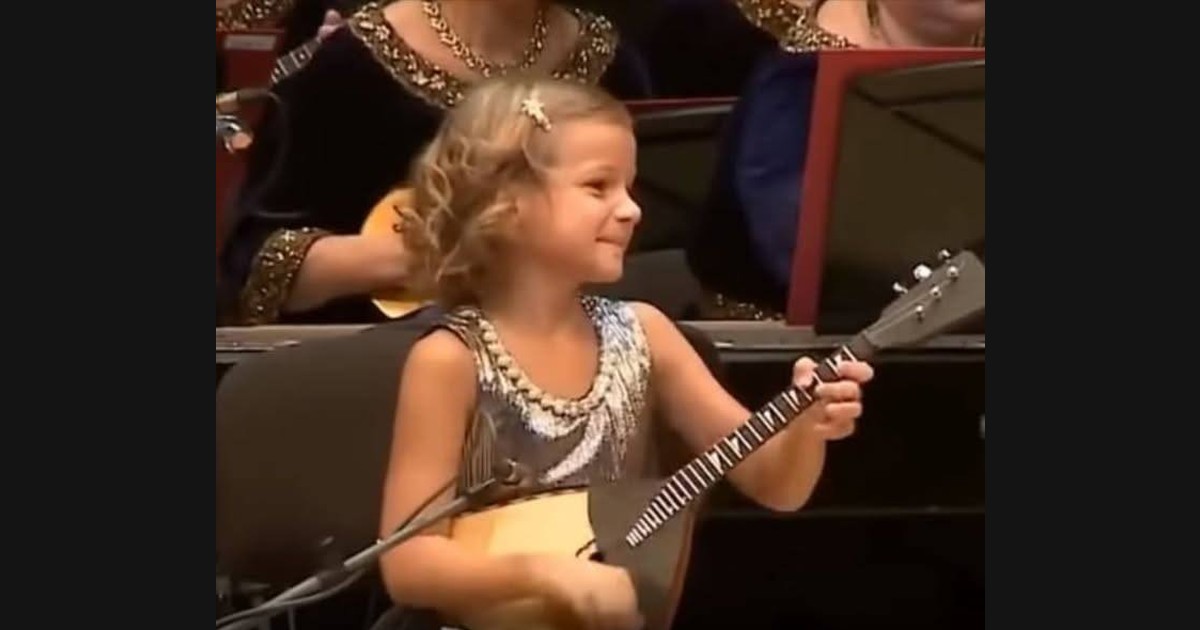
Anastasiia Tiurina’s “Valenki” offers a performance-led introduction to the balalaika. The instrument belongs to the plucked, fretted lute family; the Metropolitan Museum of Art identifies that classification in its Russian balalaika collection. The useful listening subject is how a featured plucked sound carries a phrase within a larger musical presentation.
The related “Kalinka” and a second “Valenki” with pianist Denis Matsuev create two comparisons: change the work while retaining the player, then return to the named tune with another performing partnership.
Watch on YouTube ↗
A plucked sound begins and continues differently
A plucked note has a clear beginning and then develops through its duration. A musical line can connect those beginnings into a phrase, making the listener follow a direction rather than hear only separate attacks.
Begin with one short melodic thought. Notice where it seems to start, where its emphasis gathers, and what makes its ending legible. The line’s shape can remain the principal subject even when the visible action on the instrument attracts immediate attention.
The exact technique behind every sound is a separate question. A viewer does not need to invent a name for each gesture, or assume a particular tuning from the instrument’s appearance, to follow the musical course.
A featured instrument has more than one role
A soloist can carry the principal tune, answer another contribution, or connect one section to the next. The same instrument can perform these jobs at different points, so being featured does not require constant uninterrupted prominence.
Listen through the interval between two statements. Consider what allows the music to continue while attention changes. A surrounding ensemble can provide a reference that makes a returning featured line easier to recognize.
This puts the presentation on a more concrete footing than an age-based surprise. The performance is a set of musical relationships that can be examined directly, rather than proof of a general story about exceptional ability.
Another tune changes the task
“Kalinka” supplies the second selection. It retains Tiurina and the instrument while changing the named work, allowing the listening subject to move beyond one particular tune.
Watch on YouTube ↗
Follow how a phrase becomes recognizable and how its return is prepared. Do not require the new piece to use the same proportions or the same amount of activity as “Valenki.” A repertoire can reveal an instrument’s possibilities through contrast.
Return with a named partner
The final “Valenki” upload identifies Tiurina with Denis Matsuev. It holds the named tune closer to the first selection while changing the collaboration.
Watch on YouTube ↗
Now attend to the relationship between the featured line and the other musical contribution. A partner can support continuity, provide contrast, or create a point of exchange without making every moment a contest for prominence.
“Valenki” also circulates in arranged versions for balalaika. The existence of a named published or recorded arrangement does not establish that every performer uses the same score, so an exact arranger should not be assigned without evidence.
The three selections are most informative as a small repertoire study. The instrument provides a continuing sound, the changing works supply different musical courses, and the Matsuev collaboration offers another public relationship through which to hear a familiar tune.


