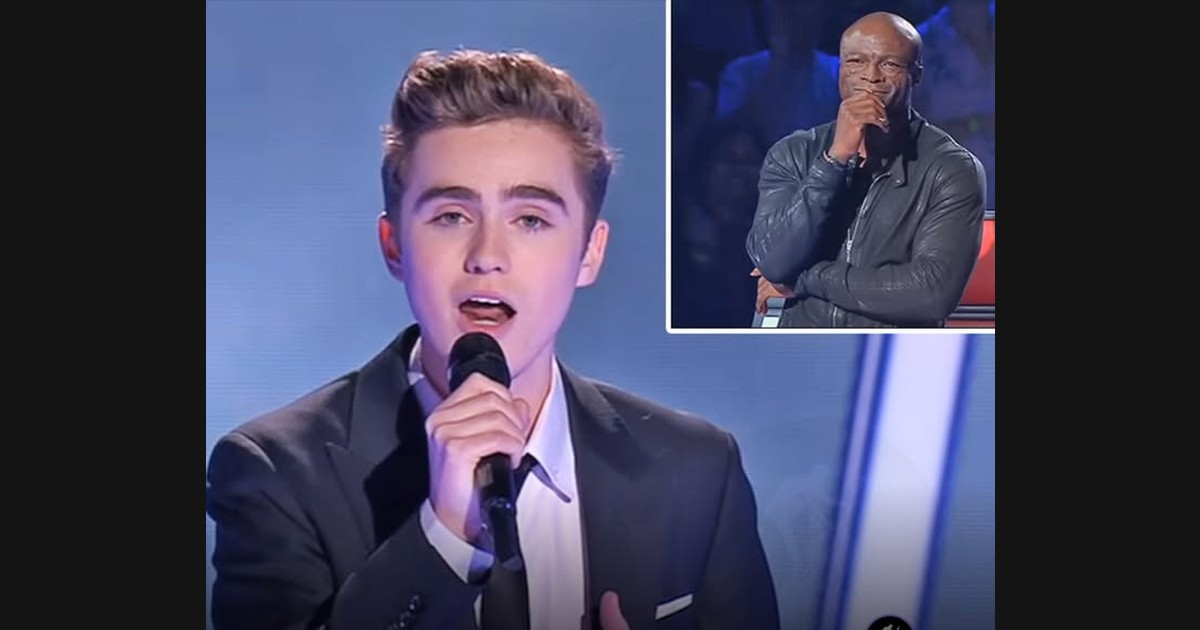
Harrison Craig’s “Broken Vow” is substantial enough to hear as a performance, rather than as evidence for a medical story. His official biography identifies his The Voice Australia victory, but a musical selection should not be made to demonstrate a diagnosis, a cure, or a universal explanation of how speech and singing relate.
The song also has a history beyond the artist named in the first uploader’s parenthesis. Lara Fabian’s 1999 recording places “Broken Vow” in an earlier catalog. A strong association with Josh Groban does not make every later version an interpretation of a work he originated.
Watch on YouTube ↗
Begin with the musical statement
Choose a complete phrase and follow where it seems to be heading. A vocal interpretation makes meaning through emphasis, duration, and its relationship with the accompaniment, not only through the most immediately noticeable note.
Then listen through the phrase’s completion. An ending may settle a thought, sustain uncertainty, or prepare the next statement. The connection is part of what makes a performance coherent across time.
These are observations a listener can make without treating the song’s narrator as the singer’s private self. A performer can communicate an imagined situation while retaining a distinct public identity outside it.
Separate a version reference from an origin
An uploader may add a familiar artist’s name to help identify the rendition or style of a song. That can be a useful reference, but it is not a full writing credit or a complete recording history.
The earlier Fabian release makes this distinction concrete. A listener can know the work through Groban or Craig while still acknowledging that it circulated before those particular encounters. Familiarity describes the listener’s route, not the sole origin of the composition.
This allows a comparison of interpretations without turning one associated recording into a rulebook. Different singers can preserve a work’s identity through different proportions of space and emphasis.
The competition journey adds context
The related Voice Global selection presents material from Craig’s competition journey. It gives the first performance a larger program frame, while the program’s dramatic editing remains distinct from a complete account of his musical development.
Watch on YouTube ↗
Notice which selections are being placed beside one another and what kind of continuity the compilation creates. A sequence chosen for a retrospective can make a career appear more compressed than the actual work and time between appearances.
An official audio release changes the attention
The final selection is Craig’s official audio of “Broken Vow.” It returns to the composition without requiring the viewer to follow the same surrounding television images.
Watch on YouTube ↗
Compare one phrase from the first presentation with its counterpart here. Keep the observation specific enough to describe rather than assign a single verdict to the whole performance.
The three selections then connect a sung interpretation, its competition context, and a released recording. Craig’s biography supplies public background, while the song’s earlier catalog history clarifies the repertoire. Keeping those subjects proportional leaves the music central without converting an appearance into a medical claim or an uploader’s version label into authorship.


