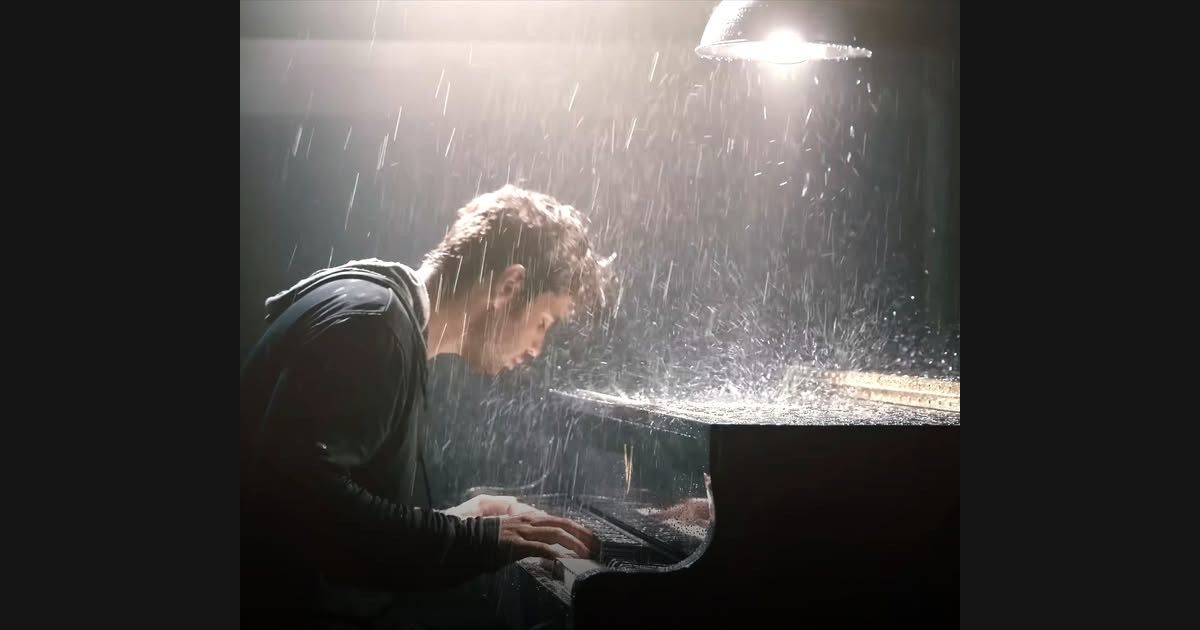
A song’s melody can remain recognizable when nobody sings its words. William Joseph’s “Nothing Else Matters” makes that change of responsibility a useful listening subject: a piano-led arrangement interprets material associated with a vocal rock recording.
Metallica’s official song catalog credits James Hetfield and Lars Ulrich as the writers. Joseph’s release separately credits him as arranger and music producer, with Caroline Campbell on violin and Vanessa Freebairn-Smith on cello. The instrumental interpretation therefore preserves a songwriting reference while adding its own performing resources.
Watch on YouTube ↗
A line needs direction without verbal emphasis
A singer can draw attention through the sound and placement of words. An instrumental melody has other resources: the beginning of a note, its duration, the space before the next event, and the relationship between the lead and its support.
Follow a complete melodic phrase rather than mentally supplying the text and stopping there. Where does the idea seem to begin, continue, and settle? Use those functions to describe the musical statement without claiming a literal translation of every word into a note.
For example, a pause before a returning figure can make the return conspicuous even without language. A supporting line can continue through that pause, keeping the larger phrase connected while the lead briefly rests. These are arrangement possibilities to check against the recording, not a transcription of a particular passage.
The piano supplies a particular kind of beginning
Yamaha’s instrument guide explains the acoustic piano’s sound-producing mechanism: pressing a key makes a hammer strike strings, whose vibration is transmitted through bridges to the soundboard. That physical example helps explain why a note’s beginning is an important part of piano articulation.
It does not identify every production choice in Joseph’s released soundtrack. Use the mechanism as background for listening to attacks and resonance, rather than as evidence that every sound in the video was recorded in one pass.
The credited violin and cello also matter to the musical account. An arrangement with those collaborators has resources beyond the keyboard. Identify which part you are following instead of assigning all audible material to the person pictured at the piano.
“Radioactive” changes the composition
Watch on YouTube ↗
Joseph’s “Radioactive” video offers another song interpreted through his instrumental presentation. Carry across the question about melodic direction, but allow the new composition to establish different musical relationships.
A recognizable artist identity does not require every cover to use the same density, sequence, or visual atmosphere. Describe one actual connection between parts rather than treating “cinematic” as a complete explanation.
The lake video changes the presentation again
Watch on YouTube ↗
Devin Graham’s “Radioactive” video with Joseph supplies another publicly labeled presentation of that song. Its lake setting belongs to its own production, not to the indoor rain scene credited in the first release.
The sequence creates two useful questions: how Joseph interprets different compositions, and how two “Radioactive” presentations frame their material. Keep those questions separate when comparing.
Returning to “Nothing Else Matters,” the central task is a melody articulated without its sung words. Naming phrase direction, note beginnings, and supporting contributions gives that task a concrete musical account beyond the striking visual setting.


