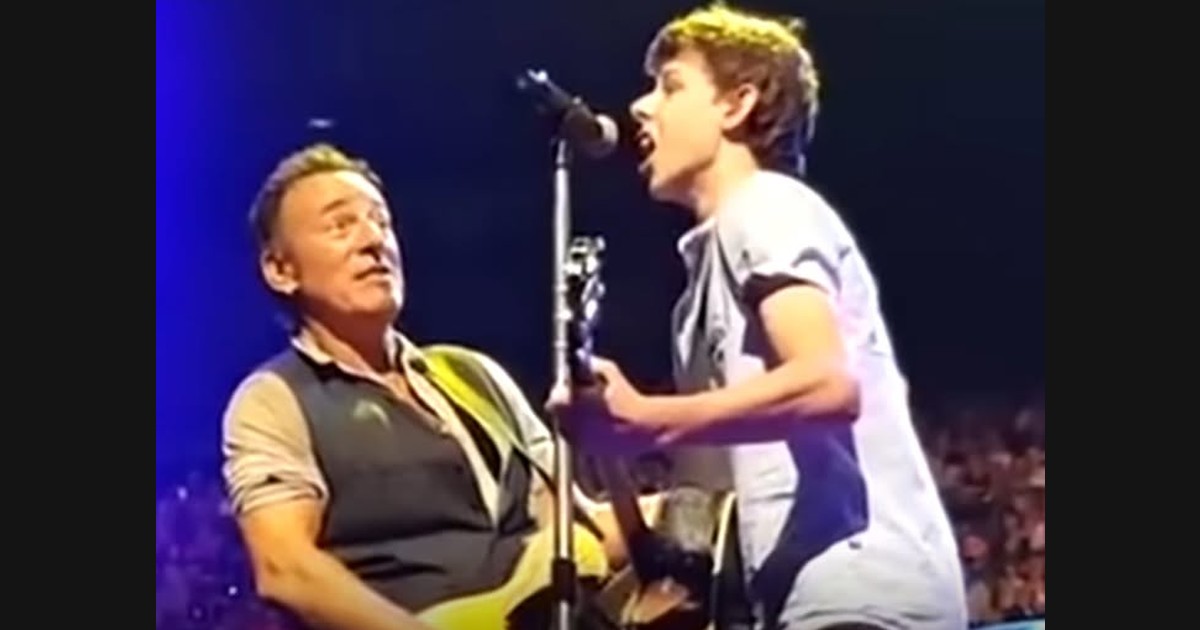
The main “Growin’ Up” upload identifies Nathan Testa joining Bruce Springsteen in Brisbane and advertises a mix of four audience cameras. That presentation gives the recording an additional subject beyond the guest appearance: several spectators’ images have been assembled into one account of the event.
Springsteen’s official tour history confirms Brisbane Entertainment Centre appearances on February 14 and 16, 2017. The particular guest selection is labeled with the later Brisbane occasion in contemporary coverage. Keep the performance context separate from the date on which any edit was uploaded.
Watch on YouTube ↗
A concert and its video are related sequences
The musicians undertake an event in one place and time. An edited video selects where a remote viewer looks during that event. A switch between audience cameras can reveal another view without representing a new entrance or another performance.
That distinction is particularly useful when a guest changes the audience’s focus. One camera may follow the established performer; another may give a clearer view of the visitor. The edit can move attention between them while the music continues.
For example, a cut from an instrument to a singer does not necessarily mean the instrument stops playing. Check the sound before turning a change in the picture into a claim about a change in musical responsibility.
What an audience-camera credit can establish
It tells you that the uploader presents the film as a combination of audience views. It does not, by itself, identify every edit, establish an absence of audio processing, or prove what happened outside the recorded material.
Use the credited format to ask an appropriately small question: how does the selected viewpoint help you follow the musical partnership? A wide view can show the performers’ relationship in space, while a closer view can make a particular action easier to notice.
The song has another concert life
Watch on YouTube ↗
Springsteen’s official “Growin’ Up” from In Concert/MTV Plugged supplies a separately identified performance. It is useful for comparing the song as established repertoire with its use during the later guest appearance.
Keep those purposes distinct. A familiar composition provides shared material, but a guest encounter has another immediate task: making a temporary partnership clear. It does not have to reproduce the earlier concert release in every detail.
Follow one complete passage rather than the isolated moment most emphasized by a camera. The preparation and continuation can explain how the guest’s contribution fits the performance’s direction.
A news selection adds a reporting frame
Watch on YouTube ↗
The Independent’s upload presents the appearance through a news headline about a young fan joining Springsteen. That is another selection and framing of the encounter, not automatic proof of a second guest performance.
Compare what each release lets you establish. The audience edit offers multiple views; the official concert reference identifies another rendition of the song; the news clip supplies a reporting frame. A precise account can use all three without merging them.
The resulting description gives both event and edit their proper roles: Testa joins a particular Springsteen performance, and the main upload combines audience viewpoints to present it. What the viewer sees is informative, but it remains a selected view of the concert.


