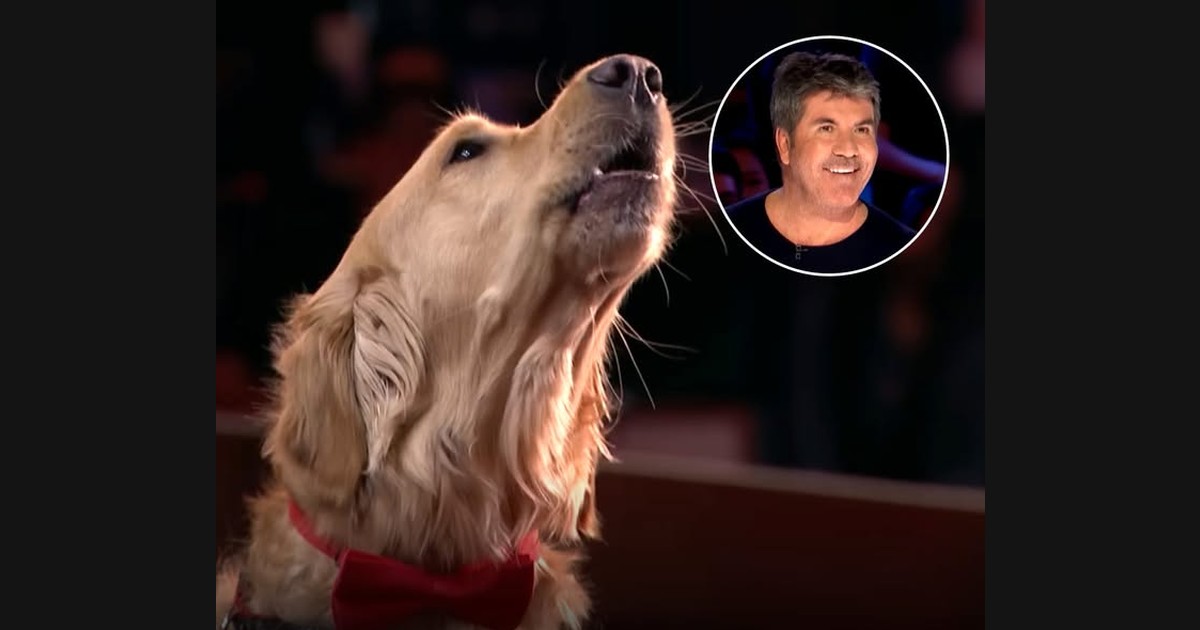
America’s Got Talent presents Oscar and Pam’s 2018 appearance as a “singing dog” act. That is an entertainment label, not a technical assessment of what a dog understands about music. The distinction helps keep a lighthearted audition enjoyable without giving its headline more evidential weight than it can carry.
The main official upload identifies the program and participants. It does not turn every response in the clip into proof of deliberate harmony, knowledge of a song, or the same kind of musical intention a human performer can explain.
Watch on YouTube ↗
Describe the act before explaining the animal
A cautious description starts with public actions: Pam presents a piano-based act involving Oscar’s vocal sounds. The recording can show when those sounds occur relative to the musical activity. A further claim about why Oscar makes a sound requires another kind of evidence.
For example, “a vocal sound follows the piano passage” describes a sequence. “The dog deliberately chooses the correct harmonic note” asserts intention and musical knowledge. The first statement can be checked against a recording; the second does not follow automatically from a memorable moment.
That is not a reason to remove the fun from the performance. Novelty entertainment often depends on an unexpected combination, and the audience can enjoy that combination without agreeing on a scientific explanation for it.
The human performer supplies a frame
The piano, the presentation, and the audition setting make the animal sounds part of a recognizable act. Without that frame, the same sounds would not necessarily be encountered as a stage performance.
Follow how the musical activity gives the appearance a beginning and an ending. Those boundaries help an audience know when to attend and when the act has finished. The structure can be discussed without claiming that Oscar planned it in the way a pianist might plan a recital.
Another upload may be another view of the same audition
Watch on YouTube ↗
The second selection is a third-party upload of the Oscar and Pam audition. Its headline describes the dog as being “on key.” Treat that as the uploader’s claim, rather than an independently verified measurement.
Before counting the clips as separate appearances, compare their event context and the material presented. A longer edit or another title can package the same underlying audition. Two pages are not necessarily two pieces of evidence for a musical ability claim.
This distinction is useful beyond novelty acts. A repeated clip with increasingly confident captions does not establish facts that the underlying recording cannot support.
A human singer’s original song is another category
Watch on YouTube ↗
Mandy Harvey’s official 2017 AGT audition is identified as an original-song performance. Its relevance here is another audition format, not a competition between a human musician’s artistry and an animal’s behavior.
Keep the questions appropriate to each act. A composition can be discussed through writing and interpretation; a novelty appearance can be discussed through its presentation and observable sequence. Sharing a television program does not make the evidence or artistic task identical.
Oscar and Pam’s clip works best as a particular piece of entertainment. Name the act, describe what occurs, and leave unverified explanations of animal intention out of the account. That keeps the recording’s appeal intact while giving the reader a clearer way to evaluate its claims.


