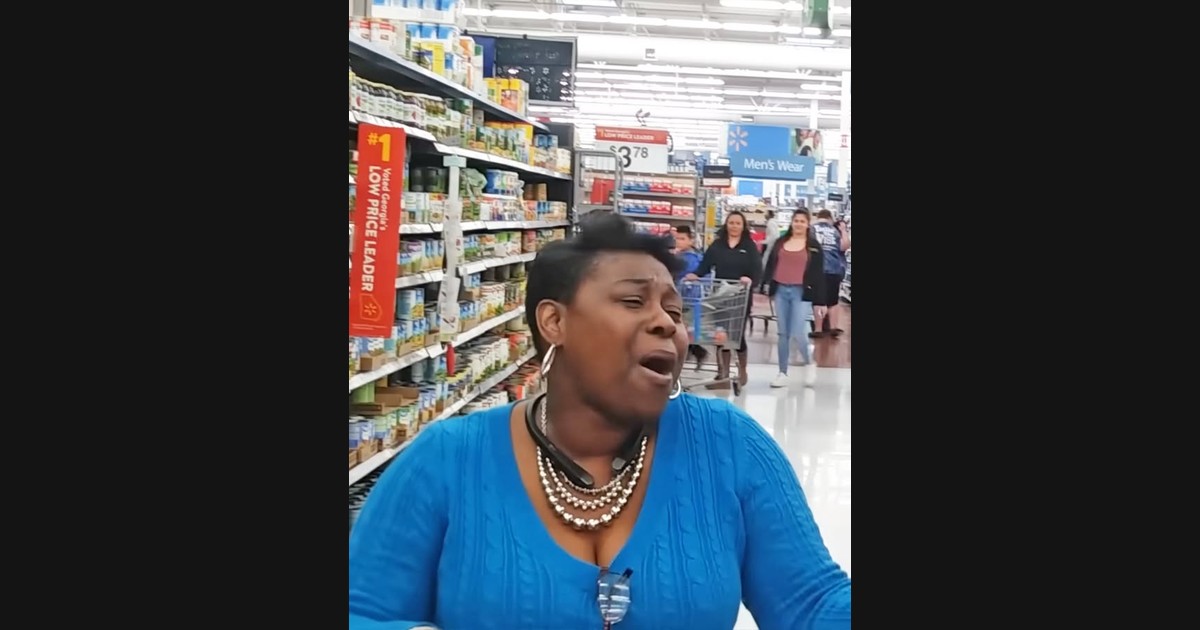
A store-aisle recording gives “If This World Were Mine” a recognizable public setting, but the song and its performers deserve more than a surprise headline. The companion interview identifies the singers as Cassandra Nelson and Donnell Cross, giving the collaboration names beyond an anonymous “Walmart duet.”
The song also has a clear writing credit. Motown’s official label-delivered recording identifies Marvin Gaye as its composer-lyricist and presents him with Tammi Terrell on United, released in 1967. It should not be casually assigned to a different songwriting partnership because that partnership wrote other familiar soul duets.
Watch on YouTube ↗
A familiar song supplies shared material
When two singers undertake an existing duet, the composition gives them a route through the exchange. Alternating statements, joined passages, and returning material can make a temporary partnership intelligible even outside a conventional stage setting.
That does not establish how much preparation occurred. A public location and a casual-looking recording do not, by themselves, prove that the singers had never met or never discussed the song. Those are separate factual questions for participants or reliable reporting.
Begin with the musical exchange the recording actually provides. Follow where a voice enters, how the other voice leaves room, and how a passage continues. Describing those actions keeps the account focused on the collaboration rather than on an imagined account of everybody nearby.
Keep the two kinds of credit separate
Nelson and Cross are the performers in the main selection. Gaye is the writer documented by the official composition credit. An earlier or better-known recording can be another interpretive reference without becoming the source of authorship.
For a practical comparison, use a short three-column note: song and writer, recording artist, and version or setting. That prevents a familiar voice from silently replacing the writer in a later account.
It also leaves room to recognize the current performance. A cover is not valueless because someone else wrote the material. Its contribution is the particular interpretation and partnership, which should be described in its own terms.
The Cheryl Lynn release supplies another reference
Watch on YouTube ↗
Cheryl Lynn’s official “If This World Were Mine” audio points toward another recorded presentation of the same composition. Compare a complete matching passage with the store-aisle duet, rather than treating a shared title as evidence of one recording session.
Follow one relationship between voices or between the lead and its support. A controlled musical comparison is more useful than deciding in advance that an informal setting must be more sincere than a released record.
The interview has a different job
Watch on YouTube ↗
The final upload identifies a GMA3 interview with Nelson and Cross. Spoken testimony can provide context that a performance does not contain. It should be used as an account from the people involved, rather than as another musical rendition.
The sequence therefore offers three different documents: a duet in a public store setting, an established artist’s audio release, and an interview about the singers’ story. Keeping those functions distinct produces a clearer account of the music and the encounter without inventing a timeline of views, guaranteed career outcomes, or private feelings.


