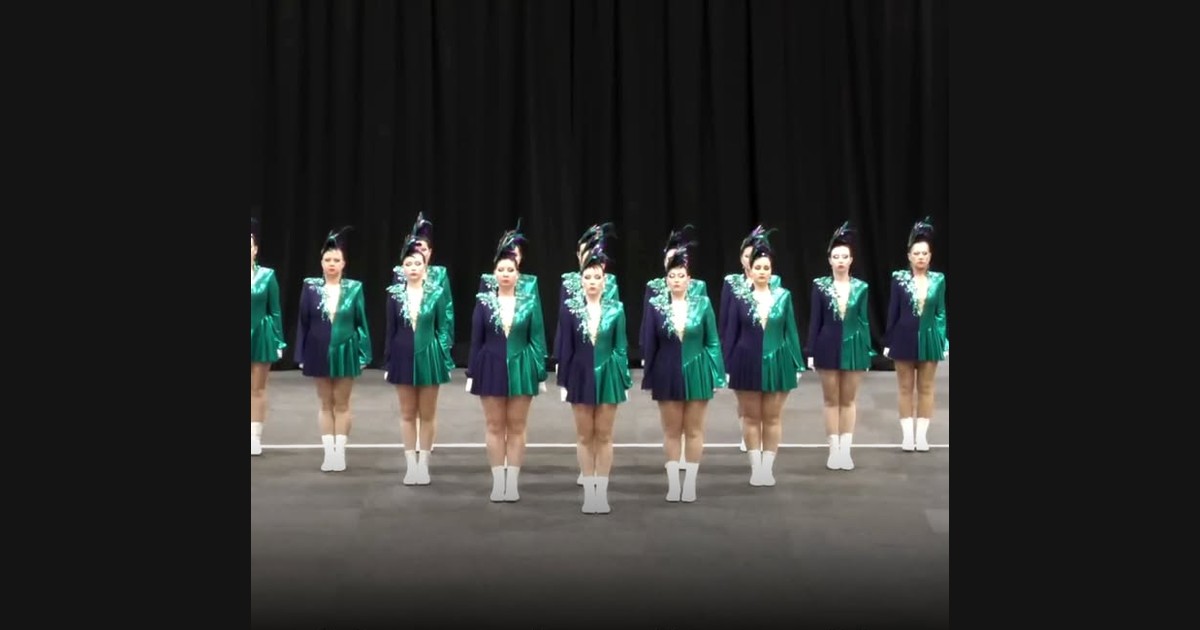
A technical-drill team creates a moving arrangement of relationships. Matching steps matter, but so do spacing, direction and the way one line connects with another. The Synergy recording labeled “Under 17’s” at the 2017 Drill Dance Nationals offers a useful introduction to that broader idea of precision.
The upload identifies the routine as technical drill and labels it a first-place performance. Those are the source’s event identifiers, rather than a reason to apply present-day age divisions or current competition rules retrospectively. The routine can be understood through its discipline without inventing a numerical score.
Watch on YouTube ↗
What technical drill emphasizes
DrillDance Australia’s own description defines technical drill through marching movements and formations within specified rules. It emphasizes teamwork, accuracy and the traditional marching presentation. That gives viewers a more precise frame than treating every coordinated dance routine as the same category.
The important unit is often a relationship rather than an isolated action. A turn changes the direction of one performer, but it can also change the outline of the group. A step affects an individual’s location and the space between neighboring people. The ensemble’s image depends on those effects remaining connected.
Look at three kinds of alignment
- Time: when an action begins in relation to the shared pace.
- Direction: how performers face or travel relative to one another.
- Space: how positions and gaps make a formation readable.
This is a viewing framework, not a judging sheet. It helps separate the components of precision without pretending to score the routine from a single camera recording. A view from one side may make some spatial relationships clearer than others.
For a focused pass, follow the outline of the group before choosing an individual. Then look at how a smaller section contributes to that outline. Moving between those scales reveals why a relatively simple action can become impressive when coordinated across an ensemble.
Exhibition drill adds a different emphasis
The second video comes from DrillDance Australia’s official 2022 championship coverage and identifies Enigma SA in senior exhibition drill. The national body’s explanation describes exhibition drill as adding choreography to a traditional marching routine.
Watch on YouTube ↗
That category difference is more useful than a simple claim that one performance is more advanced. Different disciplines can prioritize different combinations of required movement and choreographic freedom. Their shared interest in coordination does not make their purposes identical.
A thematic routine offers another frame
The final official recording identifies Enigma SA’s senior thematic drill. A theme can give costume, music and movement a further relationship, adding a representational idea to the ensemble’s spatial work.
Watch on YouTube ↗
The three recordings are therefore not three rounds of the same event. The first is the source-labeled 2017 Synergy routine; the others are official 2022 championship presentations in different disciplines.
Seen together, they clarify what a viewer can appreciate before knowing a detailed rulebook. The group must make its movement readable in time and space. Precision is the relationship among those choices, while the category helps explain what the routine is trying to present.


