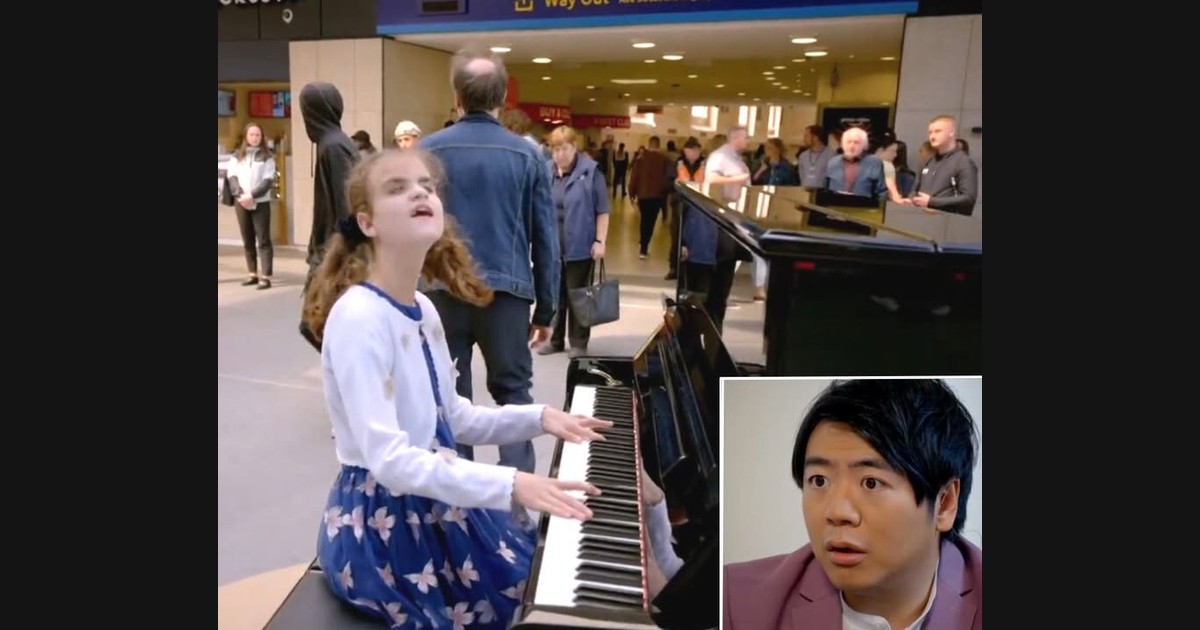
Lucy at the piano in Leeds station is first of all a musician presenting a piece. Channel 4’s account places the appearance within the first series of The Piano, a program built around public pianos and a later concert at the Royal Festival Hall. The setting explains how viewers encounter the playing; it does not have to supply an extraordinary medical or biographical explanation for every musical decision.
The three selections follow a useful route from the station to concert presentation. They keep the pianist in view while allowing repertoire, occasion, and the audience’s position to change.
Watch on YouTube ↗
Listen to the piece before the reaction
The Leeds selection presents Chopin. Begin with the musical course rather than the program’s response to it. Follow a melodic thought through the accompaniment and notice what gives a phrase a sense of arrival.
A piano can carry more than one function at a time. One part may provide the principal line while another supplies harmonic direction or recurring movement. Distinguishing those jobs can make the playing easier to follow without requiring a technical label for every gesture.
Then consider the program’s frame. A station is a place through which people ordinarily pass, rather than a room whose sole purpose is a scheduled concert. A performance there can become the center of a filmed encounter, while the television program adds another layer of selection and attention.
The concert is another occasion
The school-uploaded Royal Festival Hall selection identifies Lucy in the program’s finale. Channel 4’s own account describes the finalists preparing for that concert. It is a subsequent public presentation, not simply another camera view of the Leeds performance.
Watch on YouTube ↗
Compare how each recording establishes the beginning of the music. A concert introduction can prepare the audience differently from a station segment, even before the first phrase develops.
Keep the musical observation small enough to be specific. Choose a change of direction, a recurring idea, or a phrase ending and follow how it becomes clear. A broad claim that the whole room must have felt one emotion adds less than a description of the passage itself.
Another composer broadens the picture
The final selection, published by Classic FM, identifies a Debussy performance at the Royal Albert Hall. It changes the repertoire as well as the occasion.
Watch on YouTube ↗
A new piece can ask the pianist to organize a different relationship between melody, accompaniment, and musical space. Do not assume that a familiar performer means every recording should offer the same sound or form.
The comparison is valuable because it extends attention beyond one televised introduction. A musician’s repertoire can be encountered through several settings, with each performance deserving a listen on its own terms.
Keep context proportional
The program, school, and concert publisher supply different pieces of public context. Together they identify where the performances belong without authorizing guesses about diagnoses, private feelings, or how a particular ability developed.
Lucy’s station appearance remains a specific musical event within a television format. Hearing it alongside the concert selections makes the broader subject clearer: a pianist moves through different works and occasions, while attentive listening stays grounded in the music rather than in a simplified story of surprise.


