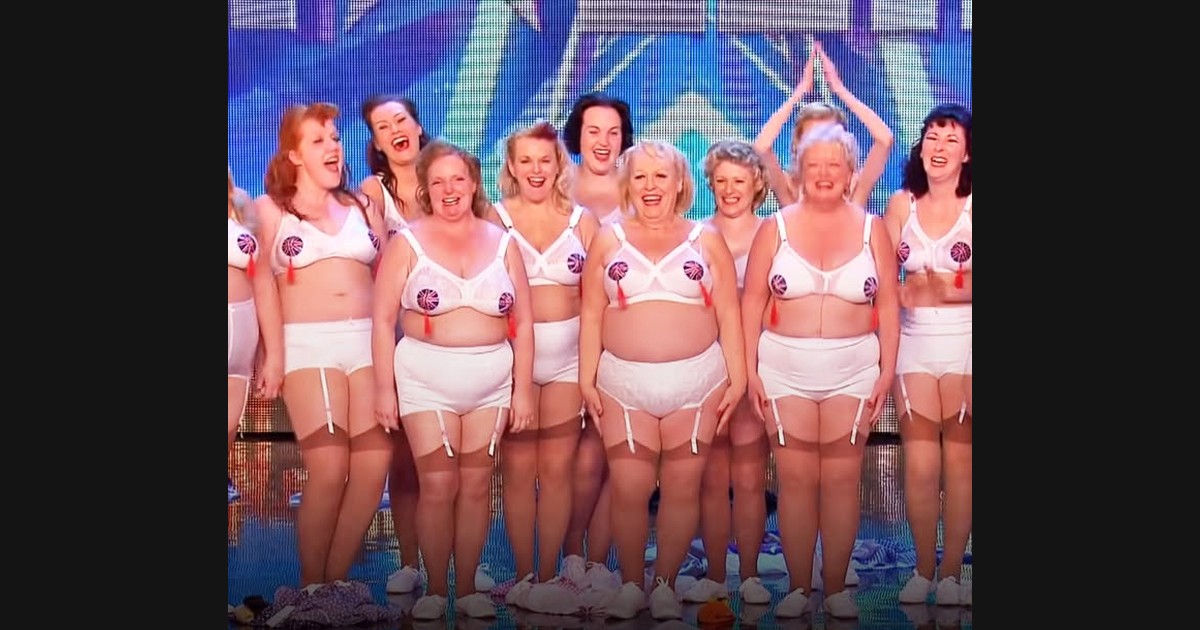
The Ruby Reds’ 2015 Britain’s Got Talent audition is organized around a change in what the audience thinks the act will be. ITV’s own report describes an opening appearance in cleaner costumes, followed by a burlesque reveal that changes the presentation.
The useful performance question is how that change works. The opening establishes one visual premise; the reveal asks viewers to reinterpret it. The act can be discussed through staging and timing without making assumptions about the performers’ private lives or reducing them to comments about their bodies.
Watch on YouTube ↗
The setup has to be readable
A reveal depends on something having been established first. A recognizable costume can do that work quickly because it suggests a role before a performer explains it. Once the role changes, the contrast becomes part of the entertainment.
That does not mean every person watching must have believed the first premise literally. An audience can recognize a theatrical setup and still enjoy the way it develops. Surprise is one possible response, not a fact to assign to everybody in the room.
For example, a stage act might begin with a deliberately ordinary visual identity and later introduce a more conspicuous one. The second appearance gains meaning from the first. Seen alone, it would be a costume choice; seen in sequence, it becomes a transformation.
A visual punchline needs a continuation
The moment of change is only part of the performance. Once the new premise is visible, the act still needs movement, coordination, and a recognizable ending. Otherwise the setup would supply a single visual joke without a developed routine around it.
Follow the material after the reveal. Describe how the performers keep the group legible: shared actions, changes in position, or repeated gestures can organize attention. Use the actual clip to identify a device rather than assuming that every burlesque routine uses the same sequence.
ITV reports that the audition received four positive votes and progressed. That is a documented result at this stage of the competition, not proof that every later appearance had the same reception or outcome.
The semi-final is a later program
Watch on YouTube ↗
The show’s official semi-final upload provides another appearance by the act. It changes the competitive occasion. Compare how much introduction is needed once an audience may already recognize the group’s performance identity.
A returning act faces a different task from an audition: it may repeat a recognizable device, develop it, or introduce another premise. Determine what the recording shows rather than treating the two uploads as one continuous routine.
Another television setting
Watch on YouTube ↗
The Ruby Red Performers channel identifies the final selection with Big Brother’s Bit on the Side. That supplies another entertainment-program context, not another BGT competition round.
The three releases can therefore be read as distinct presentations of one act. Keep the occasion attached to each, and compare one structural choice rather than ranking the performers’ appearances through age or appearance stereotypes. The first audition’s specific device remains clear: an established visual role is overturned, and the routine has to turn that change into a complete performance.


