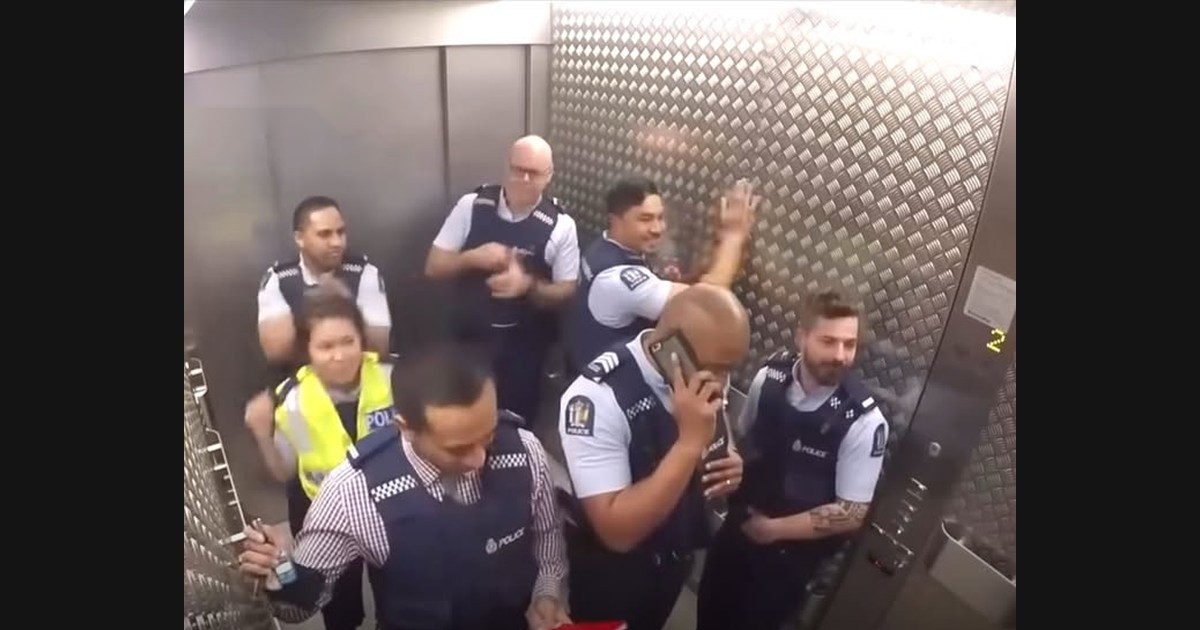
A short rhythm scene can be built from a small number of recurring actions. The New Zealand Police elevator video is useful for hearing how a steady reference and a changing pattern can make such a scene legible. Its confined setting gives the musical activity a compact visual frame.
New Zealand Police’s own social-media review describes the “elevator cops” video as a national project involving Tāmaki Makaurau staff. That context is more specific than assuming that a surveillance-style presentation must be an unplanned recording of people unaware of a camera.
Watch on YouTube ↗
Pulse is not the same as the whole rhythm
A pulse is a recurring reference a listener can follow through time. A rhythmic pattern can place actions on that reference, leave some spaces empty, or create additional events between its points. The two can coexist without being identical.
For the first viewing, concentrate on whatever gives you the clearest recurring reference. Then follow another part without losing that original sense of time. The exercise makes layering audible without requiring the exact pattern to be written in notation.
A new contribution can be noticed because it fits within an established framework. Its arrival changes the texture while the continuing reference prevents the sequence from feeling unrelated. Repetition therefore does more than fill time; it makes additions and interruptions understandable.
A pause can carry the sequence onward
Rhythmic interest does not require constant activity from every participant. A pause can prepare an entrance, make a response easier to hear, or give a returning pattern greater definition.
Choose one boundary between actions and follow the interval around it. The relationship between an event and its surrounding space can be as useful to notice as the event itself.
The visual scene supplies another kind of timing. A change in who receives attention can make a musical contribution seem like a response. Distinguish the audible pattern from the screen’s way of directing the viewer toward it.
A second publisher changes the route to the scene
The euronews selection presents the elevator jam through another news channel. It is another route to the same named scene, rather than automatic evidence of a separate musical occasion.
Watch on YouTube ↗
Compare what information the presentation gives before the performance develops. A headline or introduction can prepare the viewer to read the activity as a surprise, a joke, or a musical collaboration. That frame affects expectation without changing the basic distinction between pulse and pattern.
A different police video shifts the musical activity
The official New Zealand Police recruitment channel’s Running Man Challenge supplies the final selection. It is a separate video and a different performance format, not an additional stage of the elevator sequence.
Watch on YouTube ↗
Carry over the attention to recurring time, but allow the relationship between sound and movement to change. A movement sequence can respond to music without every visible action creating a sound of its own.
The elevator clip is most rewarding when both constructions remain visible: the musical organization of repeating and changing patterns, and the video’s public presentation of that activity. Neither requires a claim that the scene was secretly captured or that its participants were inventing the whole project in the instant shown.


