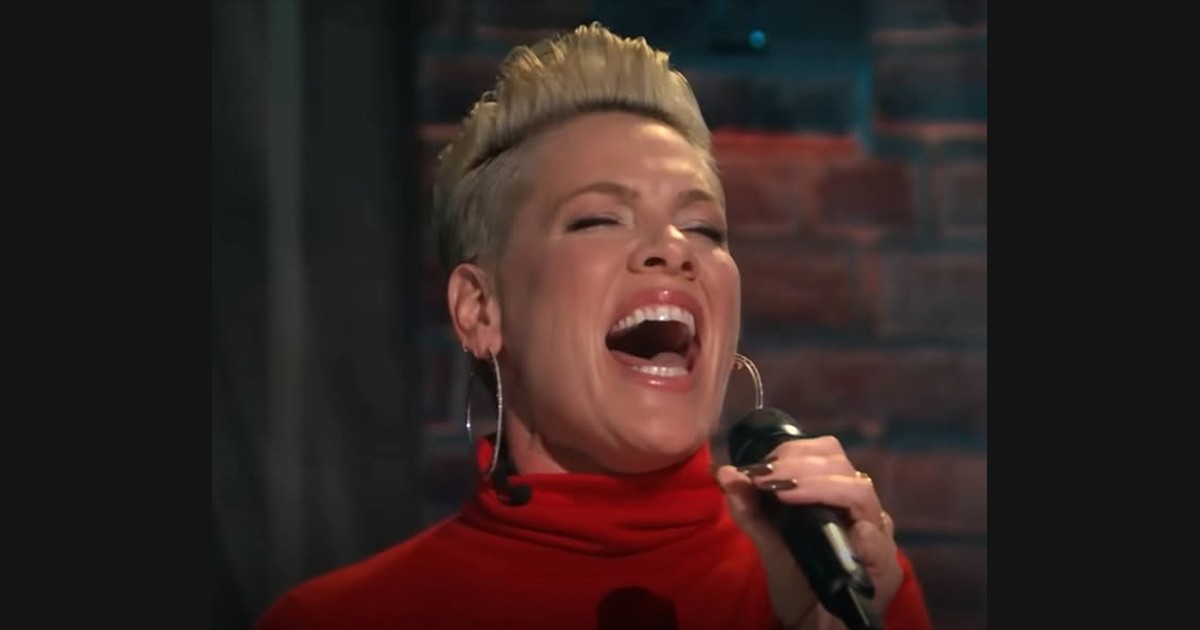
A promise in a song can gain force through the way its music returns. P!nk’s “Time After Time” for The Kelly Clarkson Show‘s Cameo-oke offers a way to hear that connection. The composition is credited to Cyndi Lauper and Rob Hyman; P!nk enters it as an interpreter, with the familiar title supplying a reference before the performance begins.
The related selections change that relationship twice: first returning to Lauper’s official video, then moving to P!nk’s own “Who Knew.” The set connects recurring musical material with different ways of presenting memory, reassurance, and time.
Watch on YouTube ↗
A returning idea can act like a renewed commitment
The title itself points toward recurrence. In a song built around a promise, the return of a musical idea can make the statement feel renewed rather than merely repeated. Its meaning is heard against what has happened in the intervening passage.
Choose a recurring phrase and follow the route toward its next appearance. Consider what makes the return recognizable and whether the preparation changes your sense of its weight. The subject is the relationship between form and statement, not an assumption about whom the performer privately has in mind.
A cover can preserve that relationship while making different choices of emphasis. The listener may recognize the work immediately, then hear the featured singer organize its course in another way.
The television format supplies a public frame
The show’s official title identifies the selection as Cameo-oke. That places it within a named entertainment format. It does not make the composition a report about an unplanned personal encounter, nor does it establish the entire production process.
The most useful attention remains with a complete musical thought. Follow its beginning through the point at which it seems to resolve or lead onward. A short television selection still has to communicate through those connections.
Lauper’s recording provides another point of origin
The official “Time After Time” video puts the song beside one of its credited writers. It supplies a reference for the work without requiring every later performer to reproduce the same vocal or screen choices.
Watch on YouTube ↗
Compare the relationship between a verse and a return in each presentation. Keep the comparison narrow enough to describe: the preparation of an entrance, the time allowed for an ending, or the space around a statement.
A familiar recording may be the version through which you learned the composition. That personal starting point is valuable, but it should not prevent a later interpretation from establishing its own coherent direction.
P!nk’s repertoire changes the work
“Who Knew” closes the set with another composition in P!nk’s catalog. It offers a different relationship with remembered events and the passage of time, rather than another version of Lauper and Hyman’s song.
Watch on YouTube ↗
Hear what the new work makes recurring material do. A return can confirm an idea, reopen it, or make earlier information feel different. The same formal device does not produce one fixed meaning across every song.
P!nk’s Cameo-oke performance becomes more informative within that sequence. It is a specific interpretation of an established song, connected to its source through writing credits and recurring musical ideas, while the related selections reveal how repertoire and presentation can change the listener’s sense of return.


