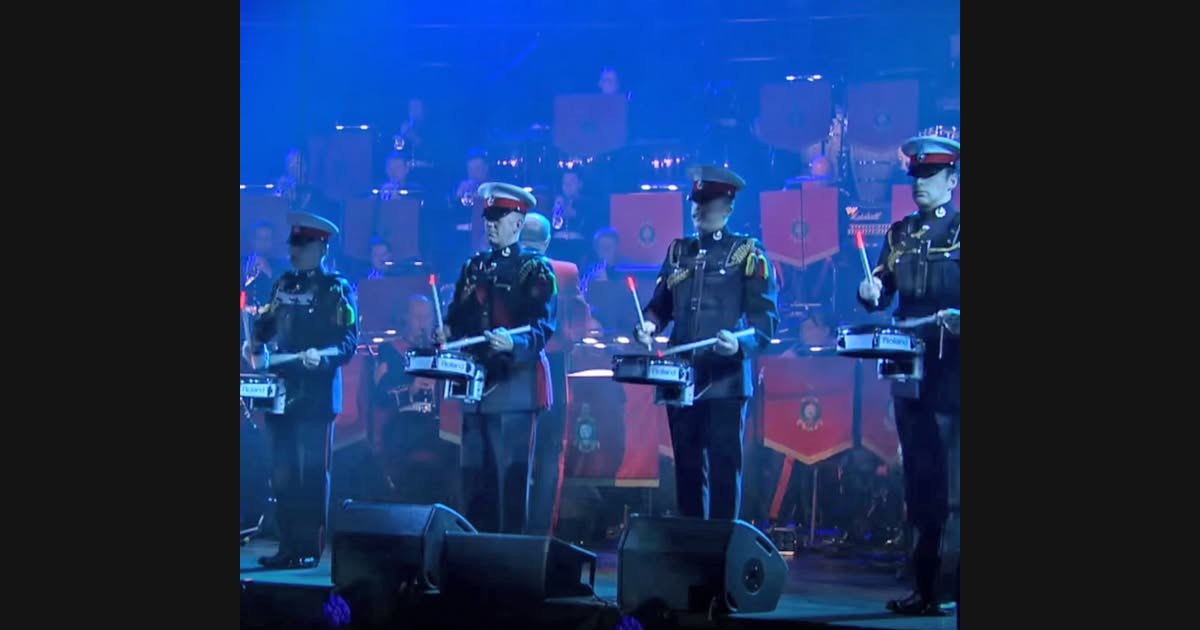
The Bands of HM Royal Marines identify their Prodigy medley as an arrangement by Band Corporal Aaron Pitman, performed at the 2022 Mountbatten Festival of Music in London’s Royal Albert Hall. Those credits establish a concert arrangement, not a claim that the ensemble has become the original electronic act.
The interesting musical question is what happens to repeated material when a present ensemble takes responsibility for it. A recurring pattern can remain central while the sounds carrying it, the support around it, and the route into the next selection change.
Watch on YouTube ↗
Repetition supplies a framework
A repeated figure gives listeners something to recognize and performers something to coordinate around. It can carry momentum without needing a new melody at every moment. The development may happen in the surrounding activity rather than in the repeated figure itself.
Imagine a short pattern continuing while another part enters above it. The pattern stays familiar, but the texture changes. Remove that added part later and the same pattern can feel newly exposed. This is a simple model for hearing development through addition and subtraction.
Apply the model cautiously to the medley. Identify an actual repeated idea and follow what changes around it. Do not assume that every section uses the same method merely because the repertoire has an electronic-music association.
The arrangement must distribute responsibilities
Someone or something has to maintain the pulse, carry recognizable material, and connect the sections. A concert ensemble can divide those tasks among performers rather than assigning everything to the part that first attracts the viewer’s eye.
The official artist credit recognizes Pitman’s arranging work. That is different from authorship of the original Prodigy material. An arrangement decides how existing material will be realized by particular resources; its contribution can be substantial without becoming the composition’s original writing credit.
For a concrete listening note, name two simultaneous jobs: one part maintains a pattern while another announces a new idea, for instance. A relationship between parts explains more than a list of instruments or a claim that the piece is simply louder with a band.
A medley also needs joins
As the program moves between selections, notice how a change is made legible. It may be a new pattern, a different texture, a pause, or a clear entrance. The transition has to connect the material into one performance rather than leaving the listener with unrelated fragments.
Watch on YouTube ↗
The ensemble’s separate “Voodoo People” release offers a more focused reference to Prodigy repertoire. Compare its framing with the medley without assuming that the two uploads contain different takes or identical arrangements before checking the music.
Another repertoire partnership
Watch on YouTube ↗
“The Maiden Legacy,” credited with Nicko McBrain, changes the repertoire reference to Iron Maiden while retaining the Royal Marines ensemble. The named guest adds a particular collaboration rather than making every performer in the sequence part of one band.
The three selections can be compared through distribution: what stays steady, what carries recognition, and what announces a transition. That gives this concert material a clear musical subject. The value is in the specific work of arranging and coordinated performance, rather than surprise that a uniformed ensemble can undertake music outside a narrowly imagined repertoire.


