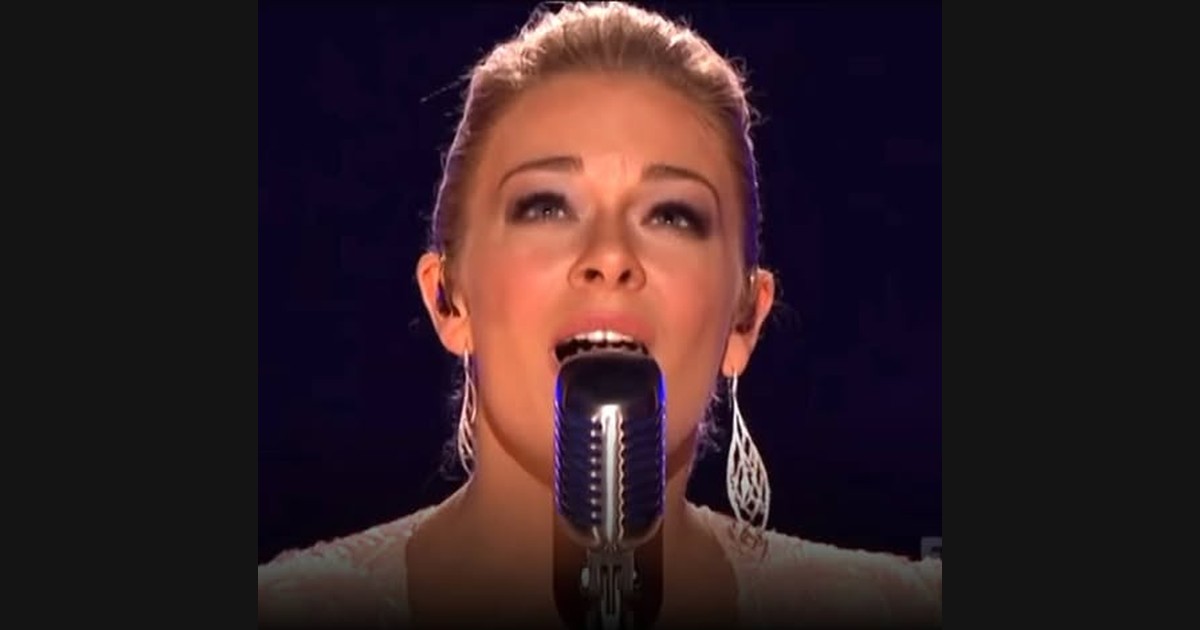
A medley is more than several recognizable songs placed beside one another. It is a short program with its own sequence. LeAnn Rimes’s Patsy Cline tribute is useful to approach in that way: the musical selections point toward Cline, while their arrangement into an occasion gives the tribute a shape of its own.
The main upload labels the performance as an appearance at the 2013 American Country Awards. Keep that identification attached to the clip without treating the uploader’s description as a complete program or a verified list of every musical detail.
Watch on YouTube ↗
A medley makes choices through omission
A complete recording can establish a song at its own pace. A medley has to decide how much material is needed before moving elsewhere. An opening phrase, a recognizable section, or an instrumental connection can supply orientation without reproducing an entire recording.
That makes “shortened” different from “unfinished.” A passage may be complete within the medley’s design even when it would be only part of a standalone song. The relevant question is whether it performs a clear job in the larger sequence.
Imagine a simple three-selection tribute. The first passage introduces the honoree’s repertoire, the second changes the musical texture, and the third supplies a recognizable conclusion. That is an illustrative program design, not a transcription of Rimes’s exact sequence. It explains why a medley needs relationships as well as individual highlights.
Listen across the joins
Transitions are especially revealing because the performance must stop being one selection and become another without losing its overall direction. A change can be connected by accompaniment, a pause, a new vocal entrance, or a change of musical emphasis.
Choose one transition and follow what makes the new selection legible. Does a recognizable melodic idea establish it, or does an accompanying pattern prepare it first? Describe the evidence you can hear rather than inventing a discussion that supposedly happened in rehearsal.
Then return to the preceding passage. Its ending may make more sense once the next selection is known. In a medley, the function of a musical moment can depend on where the program goes immediately afterward.
Compare with a standalone Cline presentation
Watch on YouTube ↗
The Patsy Cline VEVO presentation of “Crazy,” credited with the Jordanaires, provides a useful change of scale. Instead of fitting within a tribute sequence, one song supplies the organizing unit. Listen for how it establishes its own beginning and ending.
The Country Music Hall of Fame and Museum identifies Cline as an influential interpreter whose recordings continued to guide later singers. A tribute can acknowledge that legacy through selection and programming as well as through individual vocal choices.
Watch on YouTube ↗
The following single-version upload returns to “Crazy” in an audio format. Do not count the two Cline pages as two distinct historical performances without checking their release information. Here they offer different presentations against which to consider the medley’s compactness.
Describe the program’s arc
A helpful account of the tribute identifies its opening function, one transition, and how it closes. That gives the reader a reason to follow the whole performance. It also avoids reducing a medley to the loudest isolated passage or judging every excerpt by the expectations of a complete single-song recording.