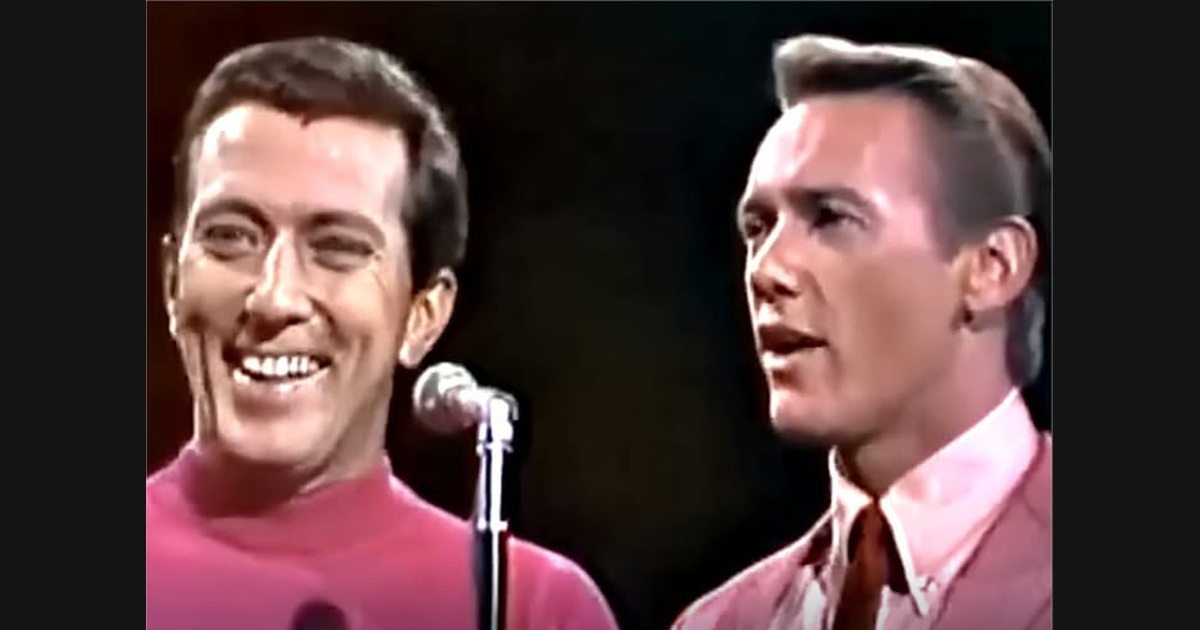
“Unchained Melody” is strongly associated with the Righteous Brothers, but the famous featured voice belongs to Bobby Hatfield. That makes the song a useful example of a distinction easily missed in music listings: the credited recording artist and the number of singers carrying a particular performance are different pieces of information.
The Rock & Roll Hall of Fame identifies the original duo as Hatfield and Bill Medley, describing the contrast between Hatfield’s tenor and Medley’s lower voice. Knowing that partnership helps locate the recording historically without requiring both men to sing every selection together.
Watch on YouTube ↗
Start with the featured vocal line
The main upload identifies a 1965 performance and advertises restored picture and sound. Approach it first as a presentation centered on Hatfield’s lead. Follow the melody through a complete phrase before directing attention toward the accompaniment.
A sustained note can attract attention, but the preparation matters too. Notice where a phrase begins, how its notes connect, and where it makes room for the next musical idea. Those observations explain the shape of the singing more fully than treating the entire performance as a contest to hold one note.
Keep the upload’s restoration label separate from conclusions about how the original sound was recorded. It does not prove that the released audio is untouched, nor does it establish a particular television program from the title alone.
The song predates this interpretation
The Academy’s record for its 1956 ceremony lists “Unchained Melody” from the film Unchained, with music by Alex North and lyrics by Hy Zaret. The ceremony honored films released in 1955. The composition therefore has a documented history before the Righteous Brothers version.
That credit chain contains three distinct contributions: North and Zaret’s song, the Righteous Brothers recording identity, and Hatfield’s featured vocal interpretation. Describing one contribution accurately does not take credit away from the others.
A matching title does not guarantee a matching recording
Watch on YouTube ↗
The Righteous Brothers Topic upload supplies an audio comparison. Check its release information before assuming it is the soundtrack of the first clip. The same artists can record a song more than once, and an audio page may belong to a different edition.
There is a concrete reason for that caution here: the Recording Academy explicitly lists an “Unchained Melody” 1990 re-recording in its Righteous Brothers nomination history. The existence of that later recording does not identify every online upload, but it shows why the title and artist name are insufficient on their own.
A practical catalog note would include the artist, song, version label, and release information where supplied. If a page provides no clear recording date, leave that field open instead of borrowing a year from a nearby video.
Change songs without losing the comparison
Watch on YouTube ↗
Willie Nelson’s “Always on My Mind” offers a separate song and a separate lead singer. Compare how a single voice gives a phrase direction, rather than looking for a shared recording session or songwriter.
The sequence becomes clearer when each label does one job: the duo’s name identifies the act, Hatfield identifies the featured voice, and North and Zaret identify the song’s authors. That clarity leaves more room to hear the interpretation itself.


