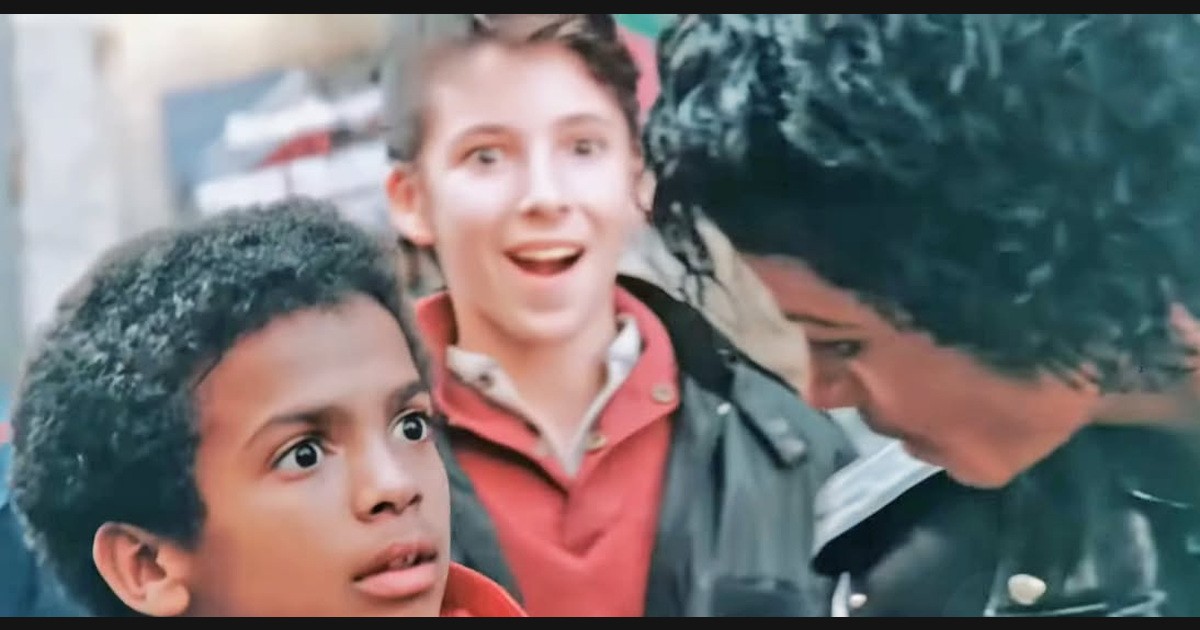
A television commercial has little time to establish a character, create an expectation and deliver a reveal. The Jacksons’ 1984 Pepsi street advertisement uses a shortcut that is also its subject: a young performer already knows Michael Jackson’s style. The audience can understand that musical admiration before anyone needs to explain it.
Alfonso Ribeiro is the young dancer in the commercial. Contemporary reporting from its premiere identified him as a performer in Broadway’s The Tap Dance Kid. That context matters because the scene was a professionally made entertainment advertisement, not footage of a chance encounter between a star and an unknown child.
Watch on YouTube ↗
Imitation gives the scene its setup
A recognizable gesture can carry a surprising amount of information. It establishes the younger performer’s interest, supplies an immediate reference for the viewer and prepares the eventual meeting. The commercial does not need to pause for a biography of either participant because the dance vocabulary does much of that narrative work.
The street setting gives the idea an everyday frame. Within that constructed world, a young admirer and an established performer can occupy the same space. The story is therefore about access as well as recognition: a style first associated with a distant celebrity becomes the basis of an encounter.
The music is familiar, but its purpose has changed
The campaign adapted “Billie Jean” with advertising words. The familiar composition helps the advertisement connect quickly with its audience, while the altered text redirects that recognition toward a product and campaign identity. This is a commercial adaptation rather than the complete song presented in a new venue.
That distinction becomes particularly clear beside Jackson’s official “Billie Jean” video. There, the music belongs to a work with its own dramatic world. In the advertisement, the song’s familiarity is used to support a much shorter promotional story.
Watch on YouTube ↗
Compare the functions of recognition in the two videos. A music video can sustain mystery and develop its imagery over the length of a track. A commercial must make its central connection legible quickly. The same artist’s recognizable movement can serve both formats, but the available time and the desired destination are different.
Why the younger performer matters
Ribeiro is not simply a small version of the star. His position in the story turns established celebrity into something another person can respond to and participate in. The campaign’s “new generation” idea becomes a relationship between performers rather than only a slogan attached to the end.
This also explains why the scene can remain memorable after the original broadcast period. A setup based on imitation and an encounter based on recognition are readable without knowing the campaign’s sales results. The commercial makes a miniature narrative out of an existing cultural connection.
Another copy of the same historical advertisement
The third video is another upload of the 1984 commercial, rather than a separate newly filmed collaboration. It offers a second presentation of the same campaign material.
Watch on YouTube ↗
Seen as a piece of short-form staging, the advertisement has a clear economy: familiar music supplies identity, dance establishes admiration, and the encounter completes the premise. The product message belongs to that construction. Understanding the design makes it possible to appreciate the performers while also recognizing exactly what the original film was made to do.


