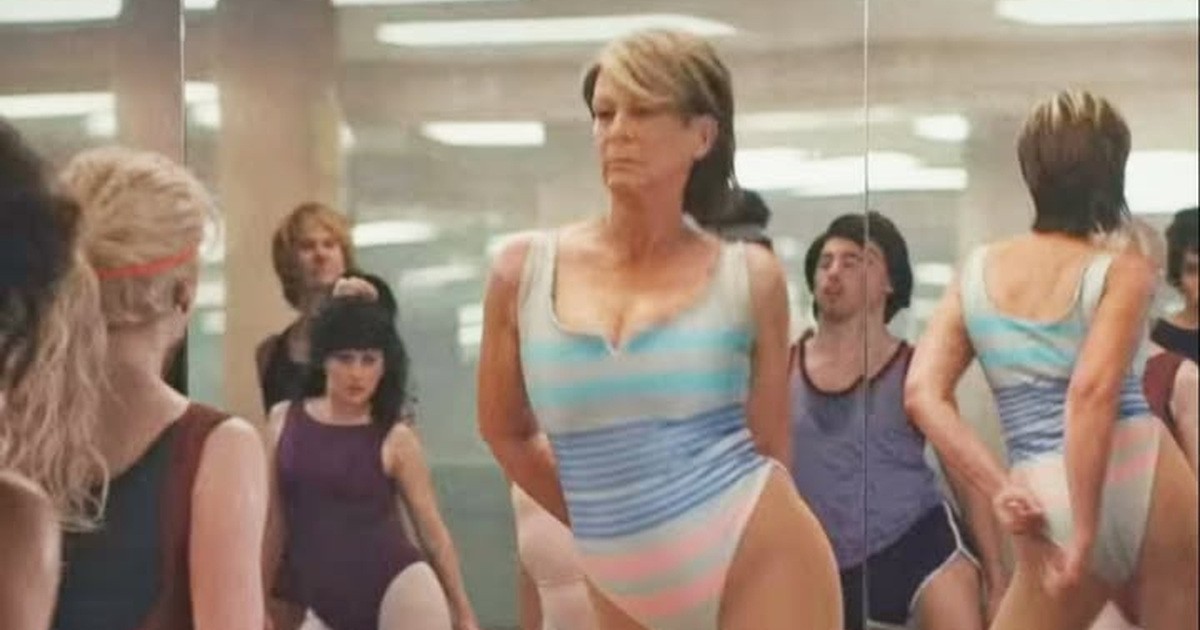
A scene can return as an excerpt, a remake, or a joke about the way audiences remember it. Jamie Lee Curtis and Jimmy Fallon’s Perfect segment belongs to the third kind of encounter: a new television performance uses a recognizable film reference as the starting point for comedy.
Perfect is the 1985 Columbia Pictures drama starring Curtis and John Travolta. Sony’s film description places Travolta’s reporter inside a story involving a health club. That gives the exercise setting an original narrative context beyond the isolated movements that a later clip may emphasize.
Watch on YouTube ↗
The original reference and the new performance
The official Tonight Show upload calls the segment a recreation of the aerobics scene. Curtis provides a direct connection with the film, while Fallon enters a new version of its screen situation. The sketch can use recognition without being a literal continuation of the original story.
A recreation needs enough continuity for its reference to remain legible. At the same time, comedy requires room for a change in expectation. Those two needs work together: an audience recognizes the frame, then notices something that no longer fits comfortably inside it.
When watching, separate the recognizable premise from the additions made for the sketch. The first tells the viewer what kind of scene is being invoked. The second gives the new performance its reason to exist. A successful reference does not have to reproduce an entire film scene before departing from it.
An archival claim can be part of the joke
The related interview upload uses the language of previously unseen footage. In this setting, that is a comic presentation device, rather than independent proof that newly performed material was retrieved from a 1980s film archive.
There are two levels of address: what the sketch pretends to be and what the television program is presenting. Keeping those levels separate allows the fictional premise to be enjoyed without confusing it with the production history of Perfect.
Watch on YouTube ↗
The interview framing supplies a route into the recreation. It can make the viewer expect a discovery, then use the contrast between that expectation and the presented material as part of the humor. The explanation around a sketch is therefore more than an interchangeable introduction; it helps determine how the following images will be understood.
A screen performer can revisit a different role
The final selection features Travolta discussing dance associated with Pulp Fiction on The Late Late Show. It is another example of a performer returning to a recognized screen identity, but it is not part of Perfect or evidence about that film’s original rehearsal process.
Watch on YouTube ↗
The useful comparison is how a talk-show setting turns earlier work into a present activity. A remembered scene can become a demonstration, a conversation, or a newly constructed joke. Each format changes the relationship between the performer and the audience’s existing memory.
The Curtis–Fallon recreation is most clearly understood within that distinction. Its interest lies in what the present sketch does with an older reference. It need not be authenticated as lost footage, treated as an exercise lesson, or explained through claims about the performers’ private feelings toward their earlier careers.


