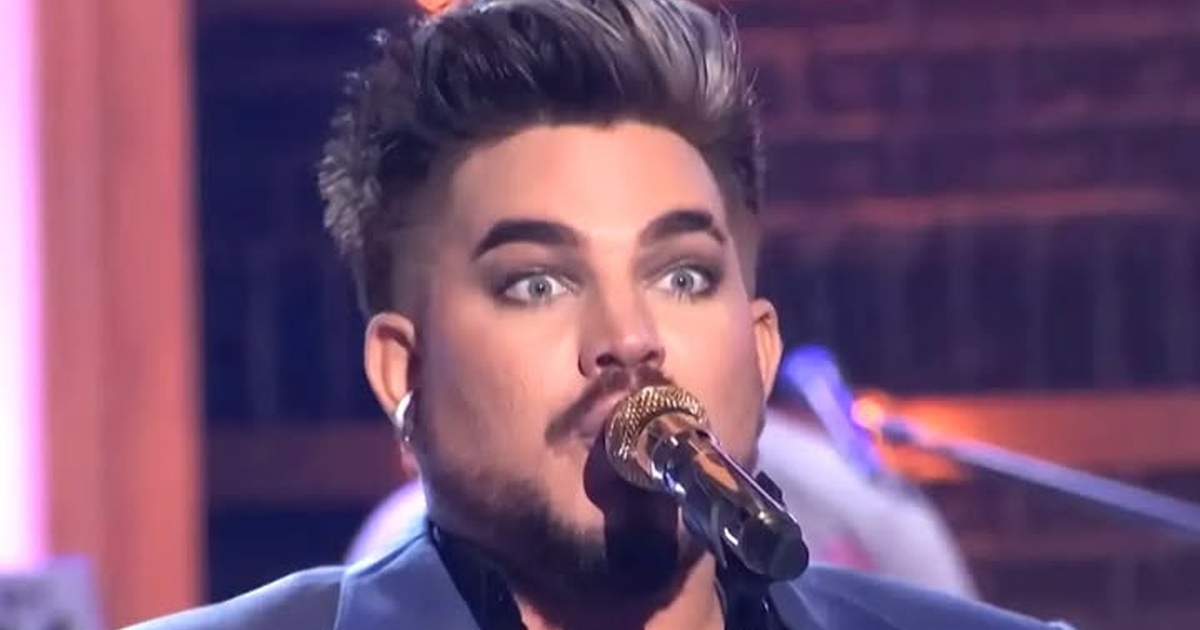
Adam Lambert’s “Muffin Man” challenge on That’s My Jam and his “Believe” performance at the Kennedy Center Honors both point toward Cher. They do so through different kinds of musical work. One asks the audience to recognize an impression inside a comic premise; the other presents an interpretation of a song associated with the honoree.
Adding Cher’s own “Believe” video creates a useful three-part comparison. It separates a performer’s recognizable identity, a composition that another singer can interpret, and a particular recording that gives both a familiar reference.
Watch on YouTube ↗
The challenge combines two references
The official program title identifies the task as singing “The Muffin Man” as Cher. Its premise is already a mismatch: one named piece supplies the material, while another artist supplies the proposed style. The humor depends on the audience being able to recognize more than one thing at once.
An impression therefore selects rather than duplicates. A performer has limited time to suggest an identity, so a recognizable feature may be made more prominent than it would be across an entire concert. The result can be effective without reproducing every characteristic of the person being referenced.
For a close listen, identify which part of the impression lets you connect it with Cher. Is your recognition tied to the way a phrase is shaped, a particular emphasis, or the relationship between the vocal line and the musical setting? A specific answer is more informative than declaring the voices identical.
A game-show premise does not reveal the preparation
The wheel gives the segment a public frame, but the clip is not a complete production diary. It does not establish exactly how much advance preparation was involved. The performance’s interest does not depend on proving that every element was invented at the instant it appeared on screen.
The important distinction is the task the program presents. Its comic combination asks Lambert to make incompatible-looking references intelligible together. That is a different achievement from treating a song as a sustained emotional statement.
Hear the tribute as an interpretation
Lambert’s own upload identifies “Believe” at the 41st Annual Kennedy Center Honors. Here the composition itself becomes the selection, rather than a stylistic reference inside another song’s comic framework.
Watch on YouTube ↗
Do not assume that honoring Cher requires continuously imitating her. A cover can acknowledge an associated artist while allowing the featured singer to choose a different sense of space, emphasis, and movement through the song. The work remains recognizable without every delivery choice being preserved.
Choose one returning phrase and follow its function within the performance. Does it provide a point of arrival or reopen a thought? This keeps attention on what the interpretation builds over time, beyond the initial recognition that made an impression possible.
Return to the artist’s recording
Cher’s official “Believe” video supplies the final reference. It is a specific presentation, not a rulebook requiring every later rendition to follow exactly the same course.
Watch on YouTube ↗
The three selections can now be heard as separate responses to familiarity. The impression makes recognition itself a comic event. The tribute gives an established song another interpretation. Cher’s recording supplies an artist-centered reference with its own identity. Keeping those functions distinct explains why Lambert can invoke the same performer while undertaking two substantially different musical tasks.


