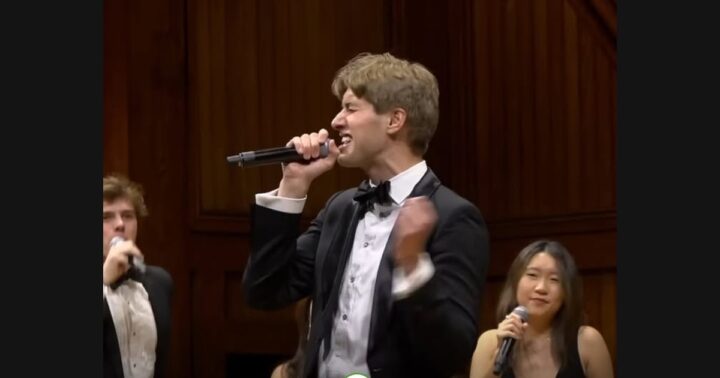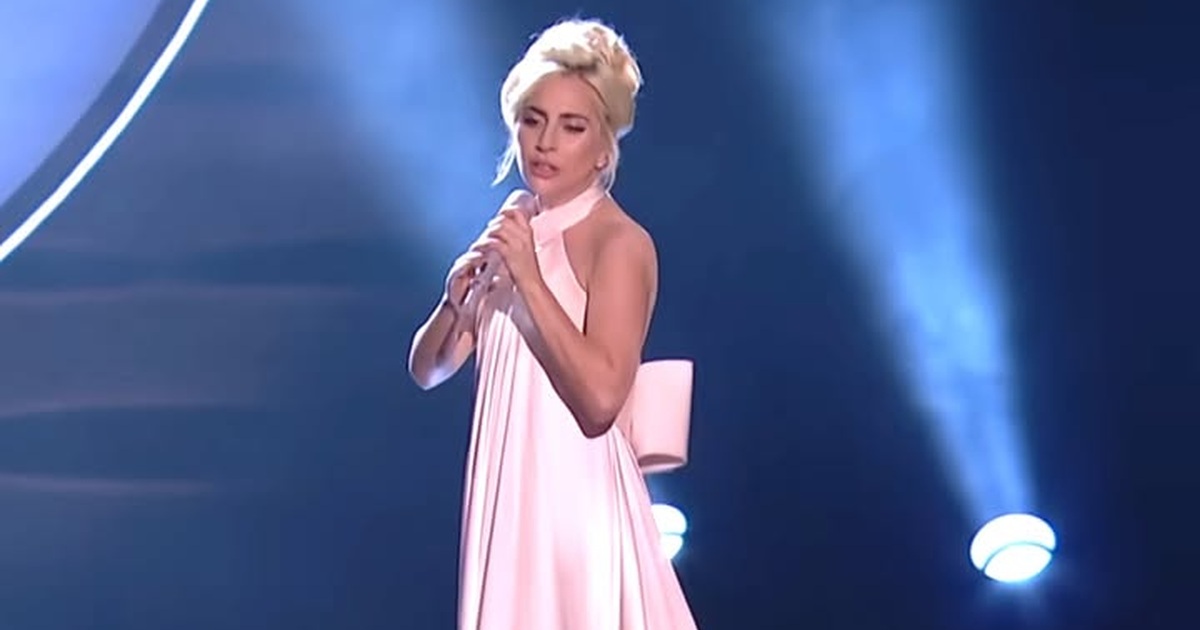
Describing a singer as versatile becomes more useful when the description names what changes. A sustained ballad line, a film song brought onto an awards stage and a rhythm-centered tribute can ask different things of the same voice. The three selections here provide a way to discuss those tasks through Lady Gaga’s repertoire.
Begin with Million Reasons at the Royal Variety Performance. The official event archive places Gaga in the 2016 Hammersmith show. The next recordings identify Hold My Hand at the 2023 Oscars and I Wish at the Stevie Wonder GRAMMY salute. Keep each song’s role in view while listening for a particular musical relationship.
Watch on YouTube ↗
The ballad task: carrying a line through time
In a ballad, a listener can attend to the span of a phrase rather than only its strongest note. An opening establishes the line, continuing syllables shape its direction, and a release connects it with whatever follows. Those events provide a better basis for description than treating every sustained note as the climax.
For Million Reasons, choose a complete phrase you can follow comfortably. Describe the relationship between its beginning and ending. Does a change in emphasis, duration or accompaniment make the end feel connected to the next passage? The useful observation concerns the line’s shape, not a guess about the singer’s private feelings.
A film song brings an existing dramatic frame
Hold My Hand comes from Top Gun: Maverick; the Academy credits its music and lyric to Gaga and BloodPop. At the Oscars, the song enters another public setting. Its film connection and its stage interpretation are related, but they are not the same event.
Watch on YouTube ↗
Here, follow how a phrase seems directed beyond the singer. A musical address can be shaped by an entry, an emphatic word or the space after a line. Identify the audible choice before deciding whether it suggests reassurance, urgency or another quality. Those labels become more precise when tied to something in the recording.
Compare that task with the ballad selection. You may find a similar technique serving a different purpose, or a different technique producing a related impression. Versatility can involve continuity as well as contrast; it does not require every song to produce an entirely new voice.
The rhythmic task: staying in relation to a groove
I Wish belongs to Stevie Wonder’s Songs in the Key of Life. The tribute recording points toward a different organizing idea: how a vocal phrase participates in a repeating rhythmic setting. A groove gives you a reference against which the placement of syllables can become especially noticeable.
Watch on YouTube ↗
Follow a short underlying pattern first. Then attend to the voice in relation to that pattern: where does a line enter, gather momentum or leave space? Keep the sound of the accompaniment present in your attention. Calling the vocal energetic says less than explaining how its phrasing relates to a rhythmic reference.
Choose evidence for the comparison
Use three brief descriptions, one per song. For the ballad, record a phrase’s span. For the film song, record a feature that gives a line direction. For the tribute, record a vocal-rhythm relationship. These are distinct categories, so a single high-note comparison does not have to carry the whole argument.
Also preserve the limits of the comparison. The compositions, accompanying musicians, occasions and recorded balances change. A difference cannot automatically be credited to the singer alone. Naming those changing conditions makes the account more specific, rather than weakening it.
The reward is a practical definition of versatility. You can identify a singer meeting several musical jobs while recognizing habits that continue across them. Returning to Million Reasons after the other selections may make a familiar line interesting for a new reason: its relationship to time, address or the accompaniment that supports it.