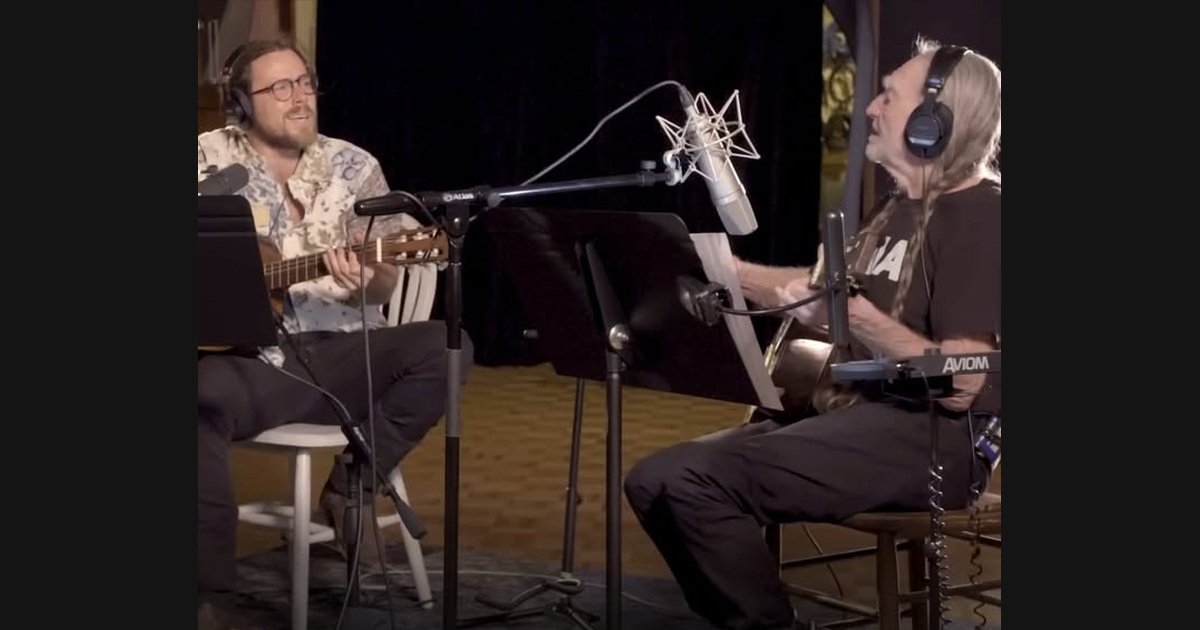
A family performance can transmit material that did not begin within the family. Willie Nelson and the Boys’ Blue Eyes Crying in the Rain makes that relationship particularly clear. Willie, Lukas and Micah undertake a country standard whose writing belongs to Fred Rose.
The Country Music Hall of Fame identifies the song within Rose’s catalogue. Nelson’s official episode, meanwhile, places the performance in Willie’s Stash, Volume 2, a project of standards and classics shared by Willie and his sons. Composition history and family participation make different contributions to the record.
The family-project episode
Watch on YouTube ↗
A repertoire can be inherited through doing
Knowing that a song exists is different from learning to undertake it. A shared repertoire gives people something they can return to together. Its continuity depends on the present performance, rather than only on preserving an earlier recording.
This makes musical transmission practical. A familiar sequence, a melody and a way of relating to the material can become part of a group’s common reference. The song remains existing writing while another gathering gives it a current use.
A family connection adds context without automatically explaining every note. Similarity of surname does not establish identical interpretation, and resemblance does not have to be the only musical interest. Different participants can contribute while retaining a common piece.
A standard has more history than one signature recording
A song closely associated with a performer may be discovered through that voice. Restoring the writing credit does not reduce the interpreter’s importance. It explains a longer journey through which material becomes available.
Rose’s composition and the Nelson project therefore belong together without being interchangeable. One identifies the writing; the other identifies a particular act of undertaking it. The distinction lets a family repertoire remain connected with a wider country tradition.
The album framing supplies another useful fact. The official description connects this volume with the earlier December Day project involving Willie’s sister Bobbie. The family context is part of a documented series rather than an invented private reunion story.
The same artist in a later festival frame
The next recording is Willie Nelson & Family performing Last Leaf at Farm Aid 2024. A different composition and public occasion change the task while retaining a named performing connection.
Watch on YouTube ↗
A festival selection is not another episode of the same project simply because family appears in the credit. The published event and repertoire should remain attached to the particular item.
Another presentation of ‘Last Leaf’
The final official video returns to Last Leaf in an artist-published form. The composition stays constant after the festival recording, while its publication frame changes.
Watch on YouTube ↗
The sequence therefore connects several kinds of continuity. A standard travels through interpreters, a family project gathers shared repertoire and another song appears across different presentations. The opening episode is most useful when those relationships remain clear. Willie and his sons make existing writing present together, extending its life without replacing the writer who supplied the material.


